09 February 2026

Think about this ...

Think about this: 

If DNA was not involved in the origin of life because it has no enzymatic properties, then how could DNA now actively control the development of organisms?

https://evolution.berkeley.edu/reviewing-dna/ [1]

A short explanation of the above question:

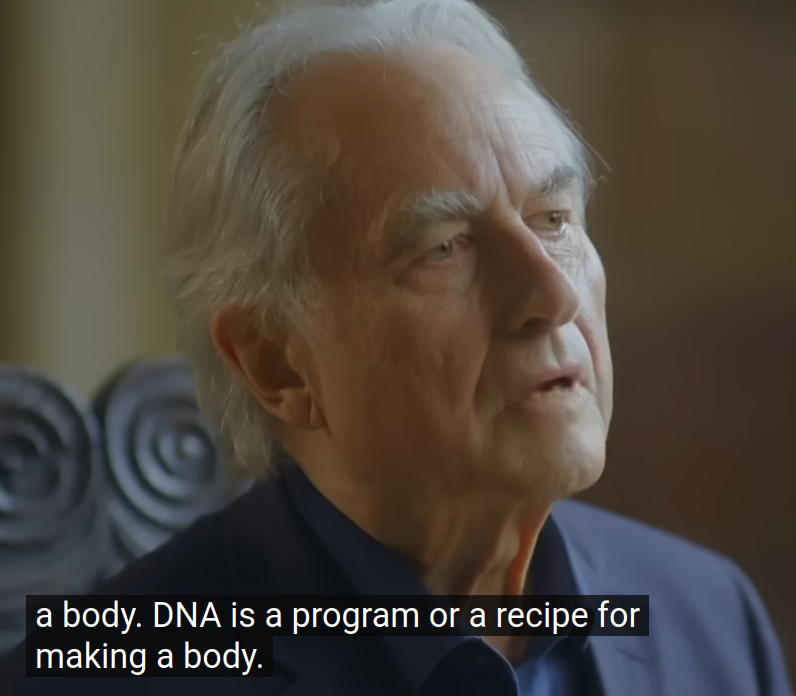
  1. Origin of Life: It is generally considered extremely unlikely or even impossible that DNA was involved at the origin of life [2]. Reasons are: DNA has no catalytic properties. RNA does have catalytic properties. Therefore, the RNA-world hypothesis was proposed. Contrary to RNA, DNA requires enzymes to be replicated, transcribed, translated, repaired, etc. Those enzymes could not have been present at the origin of life, because they have a highly specific structure, which can only be based on encoded information stored in DNA. The problem is that those enzymes needed to be present before they could be produced. Vicious circle! Chicken or egg problem! Therefore, DNA was not involved in the Origin of Life.
  2. What does DNA do? A quick search tells us that:
    - "DNA contains the instructions needed for an organism to develop, survive and reproduce" [3]
    - "DNA's unique structure enables the molecule to copy itself during cell division." [4], [5].
    - DNA is the blueprint of life [6].
    But, if the properties of DNA are still the same as billions of years ago [7], why would DNA today have the capacity to actively control the development of organisms? Replicate itself? Transcribe itself? Produce proteins? [8] Repair itself? Do anything at all? One might object that the difference between the Origin of Life 3.5 billion years ago and today, is that the human genome contains 3.5 billion bases and that is apparently enough to produce a human. That is the big difference between now and the Origin of Life! Wrong! My point is: that doesn't make DNA enzymatic! DNA still does not have any catalytic properties! [9]. Not then, and not now. Think about this: How could DNA on its own produce millions of complex beings, and yet couldn't produce the most primitive life forms 3.5 billion years ago?


I deliberately kept this post as short as possible, with just the necessary facts and arguments, in order to focus on the central question! Think about this! Once you see the inconsistency in the reasoning, you can't unsee it! 


Notes

  1. "Your DNA contains a set of instructions for building a human."  This is a bit problematic: "Some parts of your DNA are control centers for turning genes on and off." The image is from the website Understanding Evolution, Berkeley University.  
  2. "We are reasonably sure now that DNA and DNA replication mechanisms appeared late in early life history, and that DNA originated from RNA in an RNA/protein world. " Patrick Forterre, Jonathan Filée, and Hannu Myllykallio, (2004) Origin and Evolution of DNA and DNA Replication Machineries. This is a chapter in the book 'The Genetic Code and the Origin of Life' (2004).
  3. "DNA contains' the instructions needed for an organism to develop, survive and reproduce." Deoxyribonucleic Acid (DNA) Fact Sheet.
  4. "DNA's unique structure enables the molecule to copy itself during cell division." Deoxyribonucleic Acid (DNA) Fact Sheet.
  5. ... DNA (wikipedia): "...carries genetic instructions for the development, functioning, growth and reproduction of all known organisms."
  6. Quote from Oxford Home Schooling. The page contains statements such as "We can think of DNA as a large book", and "DNA serves as a store for all of our genetic information", but also: "It has the ability to replicate itself.". DNA cannot be 'a store' and have 'the ability to replicate itself' at the same time. Confusing sentences. Perhaps the confusion stems from the fact that they are 'Systematically Misleading Expressions' (Gilbert Ryle). In this case, it amounts to ascribing agency to objects which they don't have. The page is a rich source of SMEs.
  7. The chemical structure of DNA did not change. The bases A, T, C, G are inside the double-helix; A pairs with T; C with G; the backbone consists of the sugar deoxyribose and a phosphate group; the two sugar-phosphate backbone strands run in opposite directions. This is almost a necessary structure with no good functional alternatives.
  8. "Your DNA contains a set of instructions for building a human." is wrong. Even the moderate claim that "DNA contains the instructions for making a protein" is misleading. 'Instructions' involve a complete description of all the steps necessary to produce a protein from a DNA sequence. An Open Reading Frame does not contain all the instructions for how to transcribe, splice, edit, transport, bind to a ribosome, how to fold the protein, etc.
  9. Maybe, perhaps, it is slightly less wrong to say: Gene Regulatory Networks control the development and maintenance of organisms, because that is on the next higher level with regard to DNA. [Feb 10 2026


Previous blogs

26 January 2026

Five objections to the selfish gene theory

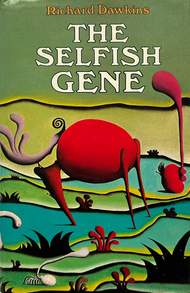
Richard Dawkins (1976) The Selfish Gene

The Selfish Gene Theory in short:

"Thus Richard Dawkins introduces us to ourselves as we really are - throwaway survival machines for our immortal genes. Man is a gene machine: a robot vehicle, blindly programmed to preserve its selfish genes." (blurb from the publisher).

"The replicators which survived were the ones which built survival machines for themselves to live in." [1-4]

Clearly, this is a gene-centric theory of life and evolution. Bodies are temporary throw-away vehicles to replicate genes. Viewed in this way, there are several problems that are not at all, or not adequately addressed in either the popular press or by Dawkins himself.

I have 5 objections:

  1. genes (DNA) cannot build organisms. Genes cannot control the organism. Genes are never active elements in an organism, they cannot do anything. 
  2. the history of life on earth shows a remarkable trend from simple to complex organisms, from single cells to increasingly complex multicellular life forms. This makes no sense from the selfish gene perspective.
  3. repair-DNA genes and enzymes are altruistic genes, not selfish genes.
  4. the selfish gene theory predicts asexual, not sexual reproduction.
  5. the selfish gene theory does predict selfish genes, not cooperative genes. 


-1-

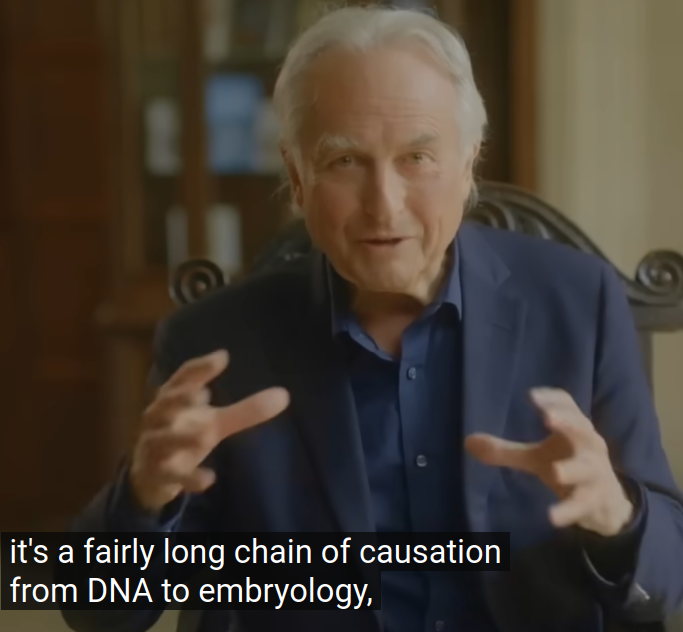
The first objection to the selfish gene theory is that genes cannot act without the help of the cell, and in case of multicellular organisms cannot act without the help of the organism. The central dogma of systems biology reads: The cell reads the DNA code. The cell decides when and which genes to read. The organism ('vehicle' in Dawkins terminology) uses the genes in its genetic library to build itself. DNA itself does not contain a program for building an organism. DNA only contains the code for producing proteins. That's a huge difference. The cell uses the library of genes to look up the exact specification of a protein and synthesizes it. Enzymes transcribe, translate, replicate and repair DNA. The cell has all the resources (building blocks for DNA, machinery, energy) for the transcription, replication, translation and repair of DNA. The cell has the power and ultimate control. DNA 'self-replication' does not exist. The cell replicates DNA with the help of enzymes. That's not all. An even more shocking fact for the reputation of DNA: the cell manipulates DNA. Specific enzymes turn off/on genes by attaching a methyl group to the DNA base Cytosine (methylation) or removing a methyl group (demethylation). So, genes do not turn themselves on/off. It is clear by now: DNA on its own is totally helpless. DNA is a dead molecule. DNA never initiates anything. DNA never leaves the cell nucleus. How could DNA be a cause?

But enzymes are helpless too, in the sense that they are unable to replicate themselves. They need the specific information encoded in genes to get synthesized. So, genes and enzymes are interdependent. Their very existence depends on each other. It makes no sense to single out one component of a system as being 'selfish'. If there are selfish genes, one could as well say, there are selfish enzymes. Those enzymes, for example: DNA-replicases, helicases, primases and ligases, want to replicate DNA, because their own specification is encoded in that DNA. So, indirectly those enzymes ensure their existence in the next generation. If genes are immortal, so are enzymes. Again: it makes no sense to single out one component of a system as being 'selfish' or as being 'the cause', or as being 'immortal'.

(this paragraph has been improved Jan 31) 


-2-

The second objection starts with an uncontroversial observation: the earth is populated by complex bodies. If selfish genes want to maximize the number of copies in the next generation, and use bodies as temporary vehicles, why do we see highly complex vehicles instead of relatively simple single cells? (bacteria). Single cells leave more descendants in shorter time, so more copies of their genes are produced. A bacterium can multiply in 30 minutes. In contrast, large, complex bodies take longer to grow and leave fewer descendants. What a waste of time! For example, in the human species, the female is only about 20% of the year fertile; it takes 9 months to grow a baby; it takes about ten years for the newborn to reach sexual maturity, and the number of offspring is significantly smaller compared to mice, flies, bacteria. So, the selfish gene theory should predict single cells as the outcome of evolution. 

-3-

The third objection is: the existence of DNA-repair genes refutes the idea that genes are selfish. DNA-repair enzymes repair DNA replication errors. They repair errors in all genes, irrespective of what the genes 'do', if anything. They do not do what one would expect of 'selfish genes': selfishly and selectively repair errors in their own genes. Repair enzymes are blind with respect what the genes 'do'. Hence, DNA-repair genes behave altruistically. This is a new and profound objection to the selfish gene theory.

-4-

The fourth objection: the selfish gene theory predicts asexual reproduction because that is the most efficient method to produce copies of the selfish genes. But that is not what we see. Sexually reproducing species are far more common than asexual species. Sexually reproducing species dilute their selfish genes with foreign genes of an unrelated individual. That means, with sexual reproduction, only half of the alleles of the male and half of the alleles of the female end up in the children. While with asexual reproduction (sort of cloning) 100% of the alleles end up in the offspring.   

-5-

The fifth objection: the selfish gene theory seems to predict selfish genes within genomes, not cooperative genes. It seems to predict a war of genes within a genome, since every gene wants to become the dominant gene. Yet, the 'selfish' genes of an organism are housed together with all other selfish genes in the same body (vehicle). In other words: they are all in the same boat! The problem is that genes housed in bodies can do nothing on their own. A single gene cannot build an organism. Even the most simple single-cell organisms need thousands of cooperating genes to build the 'vehicle'. The totality of all genes is called the genome. Only a complete genome can be the basis for building an organism. If one gene in a genome replicates significantly more than all the other genes in the same genome (a selfish gene), that could result in the death of the organism. Consequently, it would result in the death of that selfish gene and all the other genes. There is only one option for the 'selfish' genes to survive: cooperate! So, a genome necessarily is a community of cooperating genes. Paradoxically, in order to build their vehicle, those 'selfish' genes need to be altruistic towards all the other genes in the same vehicle. Remember this: The best cooperators build the best vehicles! 


Conclusion

The Selfish Gene theory is an extreme form of gene-centrism. The book The Selfish Gene became a bestseller because it resonates with our perception of human nature. The book seems to explain the urge to survive, to have sex, and to have children of one's own. The story that genes make survival machines is intuitively easy to comprehend. But it is misleading. It is wrong. It is not what really happens in the cell. The truth is more complicated than that. Genes do not have the power to control anything. From the perspective of the organism, DNA is nothing more than a storage medium and a vehicle of inheritance. Organisms want to make identical or at least very similar copies of themselves. To make that possible they use DNA. It makes no sense to single out one component (DNA) of a system as the most important, as Dawkins did. Maybe, in a sense we are programmed to reproduce, but that cannot be attributed solely to genes. If evolution is all about the replication of genes, then why complex bodies? Why sex? They are unnecessary to get genes copied. Bacteria do that much better and faster without complex bodies and sex.


Notes

  1. "We are survival machines - robot vehicles blindly programmed to preserve the selfish molecules known as genes." Preface to the first edition. 
  2. "The replicators which survived were the ones which built survival machines for themselves to live in. (...) They are in you and me, they created us, body and mind ..." page 21, hardback Oxford University Press 1977.
  3. "This DNA can be regarded as a set of instructions for how to make a body." page 23
  4. "genes control embryonic development" page 25. (all emphasis is mine) 


Previous blogs

  1. A review of 'The Music of Life' by Denis Noble. Noble is not a clown! My blog 15 Jan 2026
  2. Gene-centrism is bad biology. Here is why. My blog 17 December 2025
  3. What is DNA-centrism? Why is it wrong? My blog 10 November 2025

25 January 2026

Overwinterende zwartkop! Overwintering Blackcap!


Zwartkop. 25 Jan 2026 Sylvia atricapilla 

Overwinterende zwartkop (mannetje)

Overwintering Blackcap (male)

25 January 2026 


Op 17 februari 2021 had ik een vrouwtje Zwartkop in de tuin! Zie dit blog. Op 8 februari 2021 weer een vrouwtje Zwartkop. 

Er zijn vandaag 25 januari in Nederland 11 automatisch of handmatig goedgekeurde waarnemingen van zwartkoppen, waarvan 9 met foto's, waarvan 3 vrouwtjes en 3 mannetjes herkenbaar op foto. In totaal zijn er in Nederland in de maand januari 187 goedgekeurde waarnemingen van de zwartkop. De provincies Utrecht, Zuid- en Noord-Holland hadden de meeste waarnemingen; de 3 Noordelijke provincies hadden de minste.

Maandag 26 januari 09:27 hij zit er weer! op de drinkbak! Op 3 februari zag ik hem weer. De dagen er na eet hij ook van een appel.

Het is bijzonder dat zwartkoppen overwinteren, want het zijn, net als andere kleine zangvogels zoals tjiftjaf en fitis, insecteneters en trekvogels. 


15 January 2026

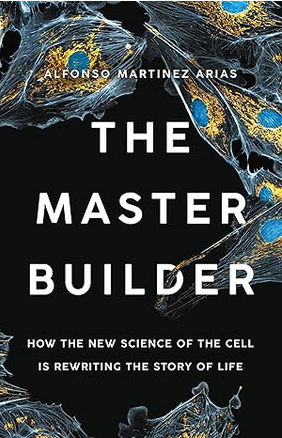
A review of 'The Music of Life' by Denis Noble. Noble is not a clown!

The Music of Life. 
Denis Noble has been unfairly attacked. One YouTuber, 'professor Dave', called Noble 'a clown' [1]. Evidently, attacking a person rather than his theory is always wrong. One of Noble's books, The Music of Life. Biology Beyond the Genome [2], contains very valuable insights about problems of DNA-centrism. Noble has gone too far in later books, but it would be foolish to ignore the very valuable insights about DNA-centrism and 'the selfish gene' in this 2006 book. Here I give a summary of his insights. His insights are in agreement with ideas in my previous blog posts about DNA-centrism [3], [4] and some of his ideas are a useful addition to my ideas.

The amazing thing is that Noble's criticism doesn't contain controversial facts. His facts are all mainstream scientific facts. The facts are not the problem. It is just that the views about the precise role of DNA in organisms in mainstream science literature is an inaccurate description of what is really going on in a cell. Noble doesn't deny the importance of DNA. It is the routine mainstream science writing about DNA that is wrong. The way mainstream science writes about DNA is based on a bad habit that crept unnoticed into the literature after the discovery of the structure of DNA in 1953, and culminated in Richard Dawkins' The Selfish Gene in 1976. 

The book The Music of Life is about systems biology. It is about putting together rather than taking apart, integration rather than reduction. DNA is important, but is not 'the control centre of the cell'. The genome is not a privileged level of causality in biological systems. The genome is on a 'lower' level than the cell. The cell or the organism is 'the system'. The genome is part of the cell, and the cell is part of the organism. The genome only functions within a system. Reducing the cell to its genome is reductionism. Reductionism as a method to discover the parts of a system is necessary and should not be replaced by anything else. The system level must be built on successful reduction. 

According to Noble, DNA as a biological molecule does not do much. The real players are the proteins. DNA is in comparison rather passive. (How could a passive part control anything?). I think that Noble's statement:

'the cell reads the DNA code'

could be called 'the central dogma of systems biology or cell biology'. This statement must be printed in a bold, large font in every biology and evolution textbook. It is a perfect antidote to the DNA-centric worldview. Here, the cell is the active part. The cell is the system. From this principle, it follows that we must describe the genome as a database (or an archivelibrarytoolbox, memory ) that is transmitted to the next generation, rather than a 'program' that creates organisms. How could a database with protein-coding genes create an organism? There must be an organizing principle. Something has to choose which genes are to be read in which cells (in a multicellular organism like us). Our worldview influences how we describe what happens in a cell. So, the language we use to describe DNA is important. The language that scientists use, reveals the underlying worldview: DNA-centric or cell-centric.

Richard Dawkins: The Selfish Gene

That is in particular true for expressions such as 'The Selfish Gene'. The way Noble analyses 'The Selfish Gene' idea is enlightening and new to me. 'The Selfish Gene' idea is in fact not a scientific theory at all, Noble says. No empirical test could possibly distinguish between 'selfish genes' and the opposite view  'genes as prisoners'. The genes are prisoners because they are trapped in huge colonies locked inside highly intelligent beings [5]. They are inside you and me; we are the system that allows their code to be read. The selfish genes do not create us, body and soul. Their preservation is totally dependent on our efforts to reproduce. We are the ultimate rationale for their existence. Additionally, Noble mentions that Dawkins agrees with him that the 'selfish gene' idea is not a scientifically testable hypothesis. I didn't realize that. Despite the fact that the selfish gene metaphor is not a scientific hypothesis, it continues to influence scientific research, thinking and writing. However, if it is an arbitrary view, then it doesn't deserve to be the standard view in biology and evolution. Noble presents us with an eye-opening alternative view.


Evaluation

I think, contrary to Noble, that there is a fact that can distinguish between the DNA-centric and cell centric view. That fact is that DNA as a molecule is passive. How could a passive molecule create you and me? A molecule that for every 'action', such as transcription, replication, recombination, repair or whatever, requires enzymes  [6]. In my view, this fact contradicts Dawkins' selfish gene view, because that view implicitly claims that genes actively control the actions of the organism. To be precise Dawkins says: we are robots obeying the commands of the selfish genes. I consider that claim as falsified. A database cannot dictate anything. Consequently, a theory of how an individual is created from a fertilized egg is far from complete by summing up all the necessary protein-coding and regulatory genes in the genome. The genes in our genome are an inventory that is necessary, but far from sufficient. Question: how do thousands of individual protein-coding genes and proteins create an individual? [7]. These are fundamental questions in biology which tend to be ignored by the standard gene-centric selfish gene account.

In several chapters, Noble elaborates the Systems view of the cell. It amounts to highlighting forgotten, uncontroversial facts. It certainly is worth reading, but I can not discuss it in this blog. My thoughts are this: molecular genetics after 1953 became a huge success, mainly because the discovery of DNA sequencing made it possible to identify genes and determine the fine-structure of genes. Additionally, genes can be experimentally modified, silenced and deleted. That enabled the determination of the functions of many genes. Furthermore, the expression of genes, even a large number of genes at the same time, could be detected. Undeniably, that is scientific progress. However, all these methods, taken together, strongly suggest that genes control everything: the development and daily running of the organism. Yes, genes are involved in almost everything, but strictly speaking, they do not control everything. The most fundamental and difficult question in biology remains unanswered: 
 
How do 25,000 protein-coding genes and proteins
 create an individual? [7]. 
 
How is that regulated? Who or what does orchestrate all this? There is more to organisms than DNA, genes, gene expression and protein synthesis alone.


Denis Noble is not a clown!

Professor Dave Explains: Denis Noble is a clown [1]

Contrary to what 'Professor Dave' claims: Denis Noble is not a clown! Don't let the loudmouths scare you away from reading The Music of Life and benefit from his insights. He is a serious and intelligent scientist. Don't be distracted by statements he made later in life.


Notes

  1. Professor Dave Explains: Denis Noble is a Clown 22 May 2025 is a video fiercely attacking the person Denis Noble.
  2. Denis Noble (2006) The Music of Life. Biology Beyond the Genome. In this review I use words and expressions from Noble's book to describe his position without giving page numbers. 
  3. Gene-centrism is bad biology. Here is why. my blog 17 December 2025
  4. What is DNA-centrism? Why is it wrong? my blog 10 November 2025  
  5. 'genes as prisoners' locked inside the nucleus of a cell: to me, it looks similar to the mitochondria which are also locked up in the cell and are completely depended on the host cell! Nice!
  6. The only 'exception' is self-splicing RNA. But RNA is not DNA, furthermore, RNA is the product of a transcription process that uses enzymes. 
  7. "one of the great unsolved mysteries of biology for nearly two centuries" from: Sean B. Carroll (2005) Endless Forms Most Beautiful (2005), page x Preface. I will return to interesting examples of Carroll's DNA-centric language.

02 January 2026

Consumentenbond heeft een verbluffend argument tegen repareerbare smartphones verzonnen


Video Consumentenbond 28 nov 2025
bovenste telefoon: anoniem; onderste: Apple, Samsung
 

Hier begint het onderdeel repareerbaarheid smartphones

"Op het energie etiket staat ook de repareerbaarheidsklasse. Deze is bijvoorbeeld hoger als een reparateur minder stappen nodig heeft om een onderdeel te vervangen en dit met gangbaar gereedschap kan doen. Dat is natuurlijk niet helemaal hetzelfde als een reparatiewinkel vlakbij jouw huis, die een probleem met je smartphone snel en goedkoop oplost. Daarom kan het zo zijn dat je met een minder bekende smartphone in de hoogste reparatie klasse, minder makkelijk terecht kunt bij een reparateur, dan met de meest verkochte Samsung en Apple telefoons. Ook al zou de reparatieklasse op het energie etiket lager zijn."


Repareerbaarheidsklasse op etiket

De smartphone expert in de video beweert dus dat je met een smartphone in de hoogste repareerbaarheidsklasse minder makkelijk terecht kunt bij een reparateur dan bij de meest verkochte Apple en Samsung telefoons. Hij zegt het niet, en hij laat het niet zien, maar Fairphone behoort tot de hoogste repareerbaarheidsklasse A. Toch suggereert hij dat je beter een iPhone of Samsung kunt kopen met een lagere repareerbaarheidsklasse (C), omdat je dan bij een 'reparatiewinkel om de hoek' terecht kunt. En met een Fairphone kun je niet terecht bij een reparatiewinkel om de hoek? Verbluffend! Hij slaagt er dus in om een voordeel om te toveren in een nadeel! Het voordeel van de hoogste repareerbaarheid wordt omgetoverd in een nadeel! Hoe krijg je het voor elkaar! Hij snapt dus kennelijk niet dat je een Fairphone zelf kunt repareren! Dat is het hele idee van repareerbaarheid! Je hoeft helemaal niet naar een 'winkel om de hoek'! Je kunt alle onderdelen online bestellen en zelf de onderdelen zoals batterij, camera, USB-C poort, achterkant, display, etc. vervangen met een iFixit schroevendraaier. Zelfs van de oudere toestellen zoals Fairphone 4 en Fairphone 5 zijn er onderdelen te bestellen. Zoals Fairphone zelf op hun website schrijft: 

"Je telefoon is helemaal de jouwe. Je kunt hem dus ook zelf repareren. Met de iFixit Schroevendraaier is je Fairphone repareren kinderspel."

Ik vraag me af: kan zo'n 'winkel vlakbij jouw huis' die onderdelen niet zelf bij Fairphone bestellen? Iedereen kan dat, dus dat zou zo'n reparatiewinkel ook moeten kunnen, toch? En als zo'n winkel meer tijd kwijt is aan het repareren van een slecht repareerbare telefoon, zou het kunnen dat die reparatie dan ook meer kost? Kan het zijn dat die gespecialiseerde reparatiewinkels noodzakelijk waren om dat de meerderheid van de telefoons slecht repareerbaar zijn?


Conclusie

[3 jan 2026]

Heel toevallig moet volgens de Consumentenbond de repareerbaarheid van smartphones precies liggen op het niveau dat Apple en Samsung nu hebben. En die hebben een slechte repareerbaarheid. Toevallig hebben de meeste mensen een Apple of Samsung. Maximale repareerbaarheid is volgens de Consumentenbond alleen maar lastig. 

Hiermee gaat de Nederlandse Consumentenbond tegen de belangen van de consument in. Een maximaal repareerbare telefoon, en in feite ieder apparaat, is in het belang van de consument. Dat heet: "right to repair" [7,8]. 


Bronnen

  1. Welke smartphone past Ă©cht bij jou? Check deze video. Consumentenbond 28 nov 2025
  2. Website Fairphone  
  3. Repareerbaarheidsscores voor smartphones, IFIXIT geeft een handig overzicht repareerbaarheid van smartphones. Fairphone heeft de maximale score: 10. Geen enkele andere telefoon heeft een 10.
  4. iFixit geeft Fairphone 5 maximale score voor repareerbaarheid Tweakers 
  5. Zo goed zijn de Fairphone 4 en Fairphone 5 te repareren  Website Duurzaam ondernemen.
  6. Dit smartphonebedrijf streeft naar the Right to Repair: “Kun je het niet openmaken, dan kun je het niet bezitten”  Brightvibes
  7. Recht op reparatie: EU-actie om reparaties aantrekkelijker te maken. Europees Parlement. update: 19-09-2025. "Na jarenlang aandringen hebben EP-leden wetgeving aangenomen die het recht op reparatie garandeert van producten die gerepareerd kunnen worden." 
  8. Directive on repair of goods, van de Europese Commissie. "This instrument aims at promoting more sustainable consumption by increasing repair and reuse of goods." [toegevoegd 5 jan 2026].


Vorige blogs