Showing posts with label astrobiologie. Show all posts

11 February 2025

My top 20 evolution books. 12 February 2025

Darwin Day 12 February 2025

Last year population geneticist Zach Hancock made a video 10 most influential papers on evolution. His list is a personal list and reflects his areas of research: Population Genetics and Molecular Evolution. Although this covers a large part of what is called 'Evolutionary Biology' today, my own list would be significantly different. However, I hadn't made such a list yet. When a visitor of my website asked whether I could produce  my own top-20 books, I decided that after 20 years of devouring books that have 'evolution' or 'Darwin' in the title, it was about time!

Surprise: this requires some additional thinking! What are the most important books? Choices have to be made. Perhaps the biggest difference with Hancock's list and with many of the popular evolution textbooks is that I have sought to include books that place evolution in its planetary and cosmological context. Life happens on a planet, so this fact must show up in the evolution textbooks. Practically speaking, Evolutionary biology textbooks are aimed at biology students preparing for a job in biological research, mostly lab research, sometimes field work. Evolutionary biology has become a specialized field separated from related scientific disciplines such as ecology, geology, paleontology, climatology, cosmology and Earth System Science. But all these disciplinary borders are created for practical purposes only. Nature does not know these borders. They are artificial. They are created by humans [1].

An Evolution textbook should discuss questions such as: Why is the Earth a habitable planet? What are the necessary conditions? How likely is the origin of a planet suitable for life? (introducing astrobiology and Earth systems science). Does a habitable planet require a moon? Is a solar system like ours inevitable? Is a planet with oceans and continents necessary for complex life? Could complex life originate on a planet with only oceans or only continents? Does life require a geologically active planet with continental drift and vulcanism? Do we need a planet that is rotating around/on its axis? a tilted axis? an orbital period of one year? Does the earth have the right size for life or could it be significantly smaller or larger? What about the composition of the atmosphere? Assuming the Periodic Table of Elements, how many chemical elements are necessary for life? How likely is it that they are present on a planet in the right proportions? 

Which features of life are universal and which are earth-bound? Is the origin of life on the earth inevitable? Is life necessarily a far-from-equilibrium system? Is life necessarily cellular? Why DNA? Is DNA the only possible carrier of hereditary information? Why proteins? Is the DNA-protein system the only possible form of life? Could proteins be replaced with RNA? Why exactly this genetic code? Are there alternative genetic codes possible? Is the genetic code a 'frozen accident' or is it necessary or both? Is the genetic code earth-bound or truly universal? Is the universal genetic code the main proof of common descent of all life on earth? Is photosynthesis a necessary precondition for the evolution of animal life? Is the autotroph-heterotroph system necessary for the evolution of complex life? Is oxygen necessary for any form of life on any planet? What is the likelihood that life on earth has existed uninterrupted for 3,5 billion years without going extinct? Why did it take so long for life to invent multi-cellularity? Is multicellularity the most difficult transition in evolution? Is the soma-germline distinction (Weizmann) necessary for complex life? 

Must complex life necessarily be of the haploid-diploid system? Or could complex life be haploid? Could multicellular complex life be prokaryotic? Is Mendelian heredity necessary for complex life? Is sex necessary? Must human reproduction necessarily be of the male-female type or could our species be completely hermaphroditic? (either partner can act as the female or male). Is the prokaryote-eukaryote dichotomy necessary or could there be intermediates? Is complex life dependent on endosymbiosis? Or could evolution have developed alternatives for the energy production by our endosymbiotic mitochondria? Does the human species need exactly 46 chromosomes? Do humans require 25,000 protein-coding genes? Do we require 3.1 billion base pairs in our genome? Why do we have so much junk DNA? Are there alternatives for all these features? Combining the probability of all events in the history of the Earth, is the origin of 'intelligent life' inevitable? Does evolution need millions or billions of species in order to be able to create humans? Is natural selection, that is the differential reproduction of heritable variants, the only way to create (complex) life? Must 'intelligent life' necessarily be a warm-blooded mammal with internal fertilization and gestation?

Ideally, evolutionary biology textbooks should discuss these questions to inspire the students, to stimulate the imagination, to ask exciting new questions and to make evolution an attractive study. Furthermore, both biology students and evolution doubters alike must be confronted with the fact that 'Darwin' and 'evolution' stand for evolutionary processes lasting 4.5 billion years on planet Earth. That planet is part of a planetary system which itself has a history. And that this planetary system itself is part of a universe which itself has a history. So, Darwin-doubters and evolution-deniers should be made aware that the theory of evolution is not an isolated biological theory that could be denied or replaced without consequences for the rest of the scientific knowledge. Textbooks should not make the same error of teaching evolution in isolation.

"There is grandeur in this view of life,
with its several powers, having been originally breathed
into a few forms or into one; and that,
whilst this planet has gone cycling
on according to the fixed law of gravity,
from so simple a beginning
endless forms most beautiful and most wonderful
have been, and are being, evolved
."
Charles Darwin

Surely, evolution textbooks are intended to prepare students for a research job in a biology department. Laboratory science is based on isolating organisms from the environment and from the whole earth system. But that is not a good reason for textbook authors to neglect the way in which evolution is connected with the earth as a system (geosphere, hydrosphere, atmosphere). The history of our planet shows that there were many geological disasters, resulting in several large extinctions, despite the fact that there is a continuous line of descent from the first forms of life to our own species. Students can not understand evolution if they don't understand why the earth is a habitable planet. Yes, in practice researchers have to specialize, they can't be allround scientists, but biology students should learn the essentials of the whole system. You can't have a scientifically correct worldview if it is restricted by the borders of your own scientific discipline. My choice of books is based on these criteria. A textbook that meets all these criteria doesn't exist, but taken together the following books come close to the perfect evolution textbook. 


My top 20 evolution books. 


  1. John Maynard Smith & Eörs Szathmáry (1999) The Origins of Life. From the Birth of Life to the Origin of Language (review) is a popular version of The Major Transitions in Evolution (1995). The authors are authorities in the field of evolutionary biology and write in a logical and factual style. They focus on the central and often unsolved problems in evolutionary theory and discuss them in a way understandable for the non-professional reader. A really unique achievement.
  2. Jerry A. Coyne (2009) Why Evolution Is True. Besides the textbooks, we need a book that focuses on the evidence for evolution without the all technical details present in a standard evolution textbook. I hope an updated edition will be published including a separate chapter about common descent.
  3. Sean Carroll (2005) Endless Forms Most Beautiful. The New Science of Evo Devo and the Making of the Animal Kingdom. A beautifully illustrated popular exposition of Evo-Devo. Animal development is under genetic control, and genetic modifications of the Evo Devo genes create all animal diversity. Evo Devo is more than just the latest addition to the Evolutionary Synthesis, it is the core of evolution. If you find a textbook intimidating, than study this book and you have a deep insight in how evolution works! After rereading it, I promoted this book from position #17 to #3. 21 Jan 2026 [3]. See also: (2001, 2004) From DNA to Diversity. Molecular Genetics and the Evolution of Animal Design. 
  4. S J Gould (2002) The Structure of Evolutionary Theory. (review). Not many people will want to read this intimidating book from page 1 to page 1433, but what he wrote about the logical structure of evolutionary theory is very useful (chapter 1,2,7).
  5. Brian K. Hall and Benedikt Hallgrímsson (2008) Strickberger's Evolution, Fourth Edition and Fifth edition 2013. This textbook includes the planetary context and geological timescales. Compare with Stearns and Hoekstra below. Compare this with other textbooks on my Introduction page.
  6. Mark Ridley (2000) Mendel's Demon. (review). A popular and educational account of the fact and consequences of the eukaryotic merger, uni-parental inheritance of mitochondria, Mendelian inheritance, sexual reproduction, error threshold, mutational meltdown. These are the unsolved problems at the frontiers of evolutionary biology. More important than Dawkins' The Selfish Gene (sorry!).
  7. Nick Lane (2002) Oxygen. The Molecule that made the World. (blog). This work was an eye-opener for me. According to Lane, Oxygen made the existence of complex animals possible. More than that: he shows how life itself created a habitable planet. Absolutely crucial. Lane connects evolution, geology and biochemistry. Oxygen is a prime example of niche construction on a planetary scale. Amazingly, this fact is not reflected in the evolution textbooks. Quotes: "Viewing evolution through the prism of oxygen gives us some surprising perspectives on our lives and deaths. If water is the foundation of life, then oxygen is its engine. Without oxygen, life on Earth would never have got beyond a slime in the oceans, and the Earth would probably have ended its days in the sterility of Mars or Venus." p.340. "Oxygenic photosynthesis only ever evolved once" (p.145). [4]
  8. James Lovelock (1988) The Ages of Gaia. A Biography of our Living Earth. (review). Lovelock is important because he pointed out that the atmosphere of a planet harboring life is in a chemical disequilibrium. This is a signature of the presence of life on any planet. Again: one cannot have full understanding of evolution without its planetary context. Darwin didn't know this. Now, we do know. It's time this fact is included in the textbooks.
  9. Lynn Margulis (2002) Acquiring Genomes. A theory of the origins of species (review). Margulis deserved the Nobel Prize for the theory of eukaryotic endosymbiosis. A revolution in biology. She is often ignored in the textbooks because of her criticism of neo-Darwinism. See my blog What exactly did Lynn Margulis contribute to science? and my review of her book Acquiring Genomes. A theory of the origins of species (updated 23 March)
  10. F. John Odling-Smee (2003) Niche construction. The neglected process in evolution (review). The reality of niche construction is undeniable. One can disagree about the extent, but not about its existence. Organisms do not passively adapt to their environments. Niche construction ought to be discussed in the evolution textbooks. Compare with Dawkins Extended Phenotype.
  11. Stuart Kauffman (1995) At Home in the Universe (review). This theoretical biologist had a huge impact on my thinking. This book was published 30 years ago, but still important. Kauffman developed a theory about life and the origin of life build on first principles (auto-catalysis). He is a critic of the gene- and DNA-centered worldview of Neo-Darwinism.
  12. Kevin W. Plaxco, Michael Gross (2006) Astrobiology: A Brief Introduction. The emphasis is on the 'biology' part of astro-biology. Putting life in its planetary and cosmic context. The best popular introduction with the proper amount of detail.
  13. Paul Davies (1999) The Fifth Miracle. The Search for the Origin and Meaning of Life. Important chapter 'Against the tide" (chapter 2): "One of the principal ways in which life distinguishes itself from the rest of nature is its remarkable ability to go "against the tide" and create order out of chaos". Chapter 4: 'The message in the Machine' contains a superb explanation of the fundamental concepts "order", "organization", "entropy", "chance", "randomness", "information", "complexity". Particularly his insightful explanation of what it means that genomes contain information. Davies explains life in a way no biologist could have done.
  14. Tim Lenton (2016) Earth System Science: A Very Short Introduction. Recommended introduction. Earth system science must be included in the evolution textbooks simply in order to understand why the earth has been a habitable planet for billions of years. [4]
  15. Stephen Stearns, Rolf Hoekstra (2005) Evolution. Second edition. I include this evolution textbook (now 20 years old) because of the treatment of 'The history of life' (83 pages) including a chapter 'Key events in evolution' and 'Major events in the geological theater'. Unfortunately no new edition has been published. Compare this with other textbooks on my Introduction page.
  16. Ernst Mayr (1982) The Growth of Biological Thought. A conceptual and historical overview of Darwinism by one of the founders of neo-Darwinism. Very rich in content and complete. I learned a lot from this book. Very important is his identification of Darwin's Five Theories (page 505-510). A shorter version of this work is: One Long Argument. Charles Darwin and the Genesis of Modern Evolutionary Thought (1991).
  17. Tibor Gánti (2003) The Principles of Life with commentary by James Griesemer & Eörs Szathmáry (review). His definition of life is superior. Based on first principles. Withstood the test of time. A standard by which all other definitions must be compared. It continues to have a fundamental influence on my thinking on what 'life' is and how the problem of the origin of life must be approached.
  18. Johnjoe McFadden (2021) Life Is Simple: How Occam's Razor Set Science Free and Shapes the Universe. Not about evolution. An illuminating history of science viewed from Occam's perspective. In a sense, Occam started the scientific revolution in the 14th century. Original. Very well written. A rewarding and entertaining read.
  19. Edward Dolnick (2017) The Seeds of Life. (blog in Dutch). Evolution cannot be understood without a good understanding of sexual reproduction. The struggle to eliminate stubborn misconceptions about sex. What are the contributions of males and females to the next generation?
  20. David Sedley (2008) Creationism and its Critics in Antiquity (review). Greek philosopher Epicurus was opposed to creationism and advanced a non-creationist explanation of adaptation. Paley argued against this Epicurean explanation. Darwin argued against Paley and strongly improved the Epicurean argument. Darwin in his historical and philosophical context.


Update: I promoted Sean Carroll Endless Forms from #17 to #3 after rereading it. [21 Jan 2026] 

Disclaimer: when a book is not on this list, it certainly doesn't mean it is unimportant! Very probably, it is on the Introduction page of my WDW website. If not, please leave a comment!

Finally, some books have wrong ideas, but nonetheless, or just because of that, stimulated my thinking. Two of them are: 

Periannan Senapathy (1994) Independent Birth of Organisms. A New Theory That Distinct Organisms Arose Independently From The Primordial Pond Showing That Evolutionary Theories Are Fundamentally Incorrect (review). This is a non-creationist argument against evolution and Darwinism. It is the ultimate DNA-centric view of life and the origin of life [1]. This book is wrong in unsuspected ways. Many problems are easy to find.  But, it took me many years to see 'the elephant in the room' and formulate the most decisive argument against this theory. While unraveling the tangle of the facts and his arguments, I gained fundamental insights about the DNA-centric view of life, the origin of life and evolution in general. It showed me the best reasons why we need a theory of evolution!     

Michael Behe (1996) Darwin's Black Box. (review). Now nearly 30 years old. Michael Behe has been crucified over and over by the scientific community because he believes in 'Intelligent design'. However, ID can safely be rejected without rejecting the idea of irreducible complexity as a potential falsifier of Darwinian gradualness.  'Irreducible Complexity' is still an interesting potential falsifier of the theory of evolution by natural selection. According to Karl Popper, falsifiability is a requirement for a proper scientific theory. 'Irreducible Complexity' highlights the fact the Darwinian gradualness has its challenges, which must be taken seriously. It stimulated research in to seemingly irreducible complex biological systems in fruitful way and increased our understanding of evolution.


Notes

  1. "...if we want to create a synthesis, we must understand that evolution is not something that pertains exclusively to biology, but rather to all domains of reality. Nature knows nothing about disciplines." David Obon (2024) Evolution: the invention of creativity: a new unifying vision.
  2. Craig Venter made in essence the same mistake as Senapathy. See also: František Baluška, Guenther Witzany (2014) Life is more than a computer running DNA software,  World J Biol Chem. (I think the authors didn't bring up the most important objection).
  3. I gave this book a higher position in the list: from position #17 to #3 after rereading it. Try to get the original hardback because the risk of an eBook is that the color plates are omitted or trashed! They are essential! 21 Jan 2026.
  4. In 2026  Earth & Life: A Four Billion Year Conversation Andrew by H. Knoll was published. It certainly fits the objective of my top-20 evolution books.  20 Aug 2026.


    30 May 2023

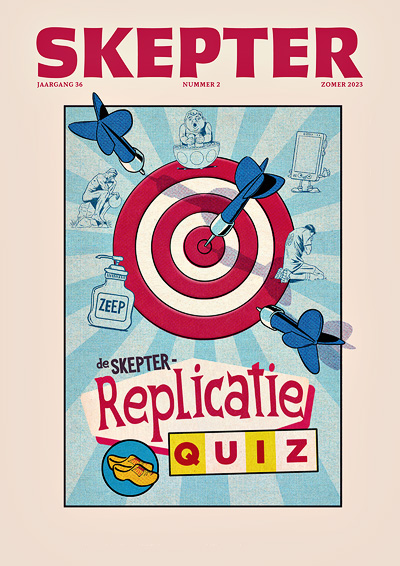
    Seks met aliens. Literatuur bij het Skepter artikel

    Skepter Zomer 2023
     

    In de Skepter zomer 2023 verscheen een kort artikel van mijn hand 'Seks met aliens'. Daarin onderzocht ik de mogelijkheid of buitenaardse wezens seks zouden kunnen hebben met mensen en nakomelingen zouden kunnen voortbrengen. Het was een spin-off van de bespreking van het boek van Erich von Daniken 'Evolution is Wrong' op mijn WDW website. Omdat ik maar beperkte ruimte had moest ik veel interessante argumenten weglaten en was er geen plaats voor een literatuurlijst. Hier is de lijst met de meest interessante publicaties.


    Literature about the possibility of sex with aliens.

      updated 9 Jun 2023

    In the summer edition of Skepter an article (Dutch) by myself appeared about the possibility of aliens having sex with humans. The magazine is published by the Dutch Skeptics society. The article is a spin-off of the review of Erich von Daniken 'Evolution is Wrong'. According to von Daniken "There were and there are genetic interventions conducted by aliens in humans." Because the size restrictions of the article I could not include many interesting arguments and literature. Here I give a literature list which I will update in the coming weeks.

    It appears that their are many obstacles to human-alien hybridization despite the fact that physical and biochemical laws are truly universal. Interestingly, the obstacles are caused by unique historical evolutionary events that happened during the evolution of life on planet earth. Those accidental features create an insurmountable barrière to hybridization.

    • Humans: Human Genome and Human chromosomes.
    • Chromosome numbers: List of organisms by chromosome count shows huge variation in chromosome number of organisms on planet earth.
    • Genetic Code: Genetic Code (universal genetic code) including Alternative genetic codes. The Vertebrate mitochondrial code (including humans) has 4 different codes compared to the Universal Genetic Code. In the evolutionary past many genes from the original mitochondrion migrated to the nucleus and only 37 genes remained in mitochondrial DNA  (a unique historical process).
    • DNA, RNA, and their building blocks are all right-handed, whereas amino acids and proteins are all left-handed. This creates an incompatibility problem for successful sex with aliens. 11 May 2026
    • Sex chromosomes: Y-chromsome, and The Incredible Shrinking Sex Chromosome, the Y-chromosome has its own unique history.
    • Non-standard chromosome number in healthy humans: Robertsonian translocation with a human with 2n=44. 
    • Pairing of homologous chromosomes in meiosis (Synaptonemal complex) is only possible between a chromosome from the father and the homologous chromosome from the mother. If the father is an alien, pairing will fail because there will be no homologous chromosomes at all, consequently the hypothetical hybrid is sterile.
    • An unusually knowledgeable Wikipedia page about hybidization between humans and non-humans.
    • Biological species are separated by reproductive barriers. A species is a group of organisms in which any two individuals of the appropriate sexes can produce fertile offspring.
    • Sex organs of alien and human must match (anatomy, physiology, endocrinology). Sperm must find its way to the egg cell, see: How sperm find their way.
    • Fertility problems are expected to be a reproductive barrier between humans and aliens. Infertility in the humans species has become a major issue for human reproductive health and affects up to one in seven couples worldwide. That is 14% of couples experience fertility problems. Estimates from 1997 suggest that worldwide about five percent of all heterosexual couples have an unresolved problem with infertility (wikipedia). And that is within the human species. See: Understanding the genetics of human infertility, Science, 13 Apr 2023. 
    • Genetic incompatibility: Genetic incompatibility of the reproductive partners: an evolutionary perspective on infertility, Human Reproduction, 2021  (Open Access) is about the human species. One problem is that natural fertilisation success is heavily dependent on the ability of sperm to traverse the female reproductive tract in the vicinity of an unfertilised oocyte. Sperm are directed towards the chemical factors secreted by unfertilised oocytes. Those factors must match.
    • Non-matching paternal and maternal epigenetic imprinting of genes active during pregnancy can cause either suboptimal or superoptimal growth of the fetus.  Wikipedia: Genomic imprinting. 25 jul 2023.
    • Human Sperm Plasma Allergy:  an immunological reaction against human seminal plasma observed in young women. When untreated this could be live-threatening. The cause is a protein in the semen. Likely, Alien sperm is expected to be a high risk for developing HSPA. (Wikipedia), (other source) 11 Jul 2023.
    • Immune system: pathogens have significantly altered the human genome. This topic has not been included in the Skepter article. The idea is that past pandemics have shaped the human genome and those pathogens and genomic changes are unique for life on earth. Alien beings will not have experienced the same pathogens and consequently those pathogens could be lethal to aliens. Also, hypothetical human-alien hybrids likely will suffer immunological problems.
    • Immunological incompatibility (pregnancy):  When pregnant, maternal immunologic tolerance is required to ensure that the (alien!) fetus is not "rejected" by the mother’s immune system. 22 Sep 2023
    • Biochemistry: here is a nice overview of Hypothetical types of biochemistry on Wikipedia (including hypothetical Silicon-based life). 
    •  

     Nederlands


    Books

    • Wallace Arthur (2023) 'Understanding Life in the Universe', Cambridge University Press; New edition. Paperback 150 pages. This is a short and useful introduction to astrobiology by an evolutionary biologist who wrote several other books on evolution and astrobiology. See also my introduction to Astrobiology page on my WDW website. 
    • Stephen Freeland (2008) Fitness of the cosmos for life, chapter 14, page 301 about the Universal Genetic Code. 
    • Erich von Daniken (2022)  'Evolution is Wrong' (see my review).
    • Bill Chalker (2005) Hair of the Alien: DNA and Other Forensic Evidence of Alien Abductions, Gallery Books. One of the rare instances that a DNA analysis is done on a hair of an 'alien'. 
    • Albert E. Potts (2021) Genetic Genesis: DNA Manipulation of Our Ancient Ancestors From the Original Biblical Text. Info van de uitgever: "Detailed descriptions of alien creation of Homo sapiens through advanced DNA technologies, in vitro fertilization (IVF), and interspecies sexual experimentation." Daar heb je het weer: kruising tussen mens en aliens! [29 Feb 2024]

    25 October 2022

    Solar eclipse 25 Oct 2022

    Solar eclipse 25 Oct 2022

    video created with SONY RX10 IV max zoom 600mm
    ISO speed rating 80 (that is very low!)
    It was cloudy weather, but the clouds functioned as a 'sunscreen' to protect the camera and at the same time it created a beautiful effect!
     
    original video on YouTube  ©Gert Korthof
     
    Solar eclipse. ©GertKorthof


    picture:

    underexposure: -2 EV (-2 stops)

    exposure time: 1/25600 sec (extremely short)

    ISO speed: 80 (very low)

    local time: 11:46 (Amsterdam time zone)

    Please note that I did not use a solar filter (I don't have one). This could be dangerous for your camera! Thanks to the clouds I could take pictures without damaging the camera. I am going to investigate which solar filter I could use for the next solar eclipse!


    geographic visibility of solar eclipse (NOS)
    (not visible in North and South America)


    Vorige zonsverduistering

    Zonsverduistering 10 juni 2021 groot succes! Sony A580 met eclipsfilter in 55-300 mm lens 10 juni 2021

    06 August 2020

    De manen van Jupiter: zelf zien en fotograferen wat Galilei 400 jaar geleden door zijn telescoop zag

    Is het niet wonderlijk? Je ziet een opvallende ster aan de hemel. Wanneer je de ster door een verrekijker bekijkt of het met een telelens fotografeert, dan blijkt het de planeet Jupiter te zijn. Jupiter is echt de leukste planeet. Want hij heeft 4 duidelijk zichtbare manen! Je hebt geen dure telescoop nodig. 
     
    Nog leuker: de onderlinge standen van de manen veranderen waar je bij staat. Het gaat niet gauw vervelen. Er zijn eindeloos veel configuraties mogelijk. Je kunt weten hoe laat het is uit de standen van de manen ten opzichte van elkaar, en of ze links of rechts van Jupiter staan. Je kunt er de klok op gelijk zetten. Die manen moeten zich met een rotgang rond Jupiter bewegen.
    Moons of Jupiter (detail)
    pijltje geeft moment van foto 1


    Ik vond een interactief diagram met de banen van de manen op een zelf te kiezen dag, maand en jaar. De grijze verticale balk in het midden is Jupiter. De manen zijn met verschillende kleuren aangegeven. NB: op het diagram zie je ook nog of de manen voor of achter Jupiter bewegen. De witte lijn met pijl geeft het moment waarop deze foto is genomen:
    foto 1: 5 aug 2020 23:03:41 Jupiter
    Sony 70-350mm ISO:102400 1/15 sec
    contrast is verhoogd om vierde maan zichtbaar te maken


    U ziet Jupiter met de vier manen. De gefotografeerde manen komen overeen met wat voorspeld is. Soms zie je maar 3 of 2 (20 augustus) of zelfs maar 1 maan (5 sept): dan staan ze voor of achter de planeet. Of ze bedekken elkaar. Fascinerende materie. Ik heb de opname iets moeten onderbelichten en foto iets donkerder moeten maken om te voorkomen dat Jupiter zijn dichtstbijzijnde maan overstraalt. Nota bene, een planeet. Geen ster. Dus uitsluitend gereflecteerd zonlicht. Net als onze eigen maan trouwens. Hier een opname van 2 augustus met 3 manen:
    foto 2: Jupiter met 3 manen. 1/25 sec. ISO:32.000
    de 'verdwenen' maan gaat voor Jupiter langs.


    Bijzonder is dat deze foto's zonder statief zijn gefotografeerd. Onmogelijk zult U zeggen! Waanzin zal een ander zeggen. Nog een ander: amateur! Maar, ik houd geen pleidooi voor sterrenfotografie zonder statief. Ik wil met deze foto's laten zien wat er allemaal verbeterd is in de fotografie en in de kunst van het maken van objectieven. Sinds Galileo Galilei (1564-1642), de ontdekker van de 4 manen, is de techniek astronomisch verbeterd! En nu kan iedereen de sensatie die Galileo ervoer herbeleven. Een belangrijke vernieuwing is de Optical Steady Shot (OSS). Er zit een bewegingssensor in de lens of camera die bewegingen van je hand compenseert. Een bijzonder slimme, nuttige en wonderbaarlijke uitvinding. Het fotograferen van sterren en planeten is laagdrempeliger geworden. Het is fantastisch om dezelfde ontdekkingen te doen over de bewegingen van de vier manen als Galileo 400 jaar geleden deed. Galileo zou zijn ogen niet geloven als hij dit zou zien.

    Nu zitten er wel grenzen aan deze OSS techniek:
    opname tijd veel te lang: 1/2 sec.

    Bij een te lange opname tijd zie je de trillingen van je hand terug in een trillend spoor van de manen en Jupiter zelf. Het lijken bliksemschichten.

    Het blijft fascinerend om te ontdekken dat dat ene lichtpuntje aan de zuidelijke sterrenhemel helemaal geen ster is maar een planeet waar 4 manen om cirkelen! Een planetenstelsel in het klein. Te bewonderen vanuit je eigen tuin of dakraam.


    Postscript 17 aug 2020


    SonyA6400 met Sony 70-350mm. ©GK

     
    Ik kon het niet laten: een uurtje na een heftige onweersbui, was er een stukje heldere lucht. Daarin stond Jupiter te pronken. Ook in overeenstemming met de Jupiter-manen kalender waren er op dat tijdstip 4 manen te zien. De tweede zit links tegen Jupiter aan geplakt. Jupiter overstraalt die maan, dus ik moest achteraf het contrast aanpassen om hem enigszins zichtbaar te maken. Op de computer wordt de ISO van deze foto aangegeven als 65.535 *). Dat is fout want op de camera had ik het maximum 102400 ingesteld. Het blijkt dat tijden van 1/15 of korter goed genoeg zijn voor een 'scherp' beeld. Langer dan 1/10 seconde worden stippen streepjes. Alles uit de hand geschoten met uiteraard Optical Steady Shot aan.


    *) 2^16 =65.536. Als je bij nul begint te tellen is het 65.535. Misschien heeft het programma dat op Ubuntu ISO moet weergeven van een foto gewoon 65.535 als maximum?

    31 July 2020

    De Sony 70-350 telezoom gebruiken voor macro en sterrenfotografie

    Gewone Oeverlibel (detail) (GK)
    Gewone Oeverlibel (detail) ©GK

    Gewone Oeverlibel (detail) ©GK
    Vleugel Gewone Oeverlibel (detail) ©GK

    Bovenstaande detail foto's zijn gemaakt met de Sony 70-350 telezoom lens. Het is helemaal geen macrolens maar geeft desondanks verrassend goede details bij maximale zoom. De afstand tot de libel was ongeveer 2 meter.

    Detail rups Groot Koolwitje (641x577)©GK
     
    De rups van het Groot Koolwitje op ongeveer 2 meter afstand met maximale zoom gefotografeerd. Letterlijk haarscherpe haartjes. Niet uitvergroot, alleen veel weggesneden.

    Gewone smalboktor (1776x1162 pixels) ©GK

    Deze Gewone smalboktor zat op het dak van mijn auto. Een schone achtergrond zonder hinderlijke grassprietjes en blaadjes. Daardoor lijkt het wel een studio opname! Genomen op de kleinst mogelijke afstand (plm. 1 meter).

    Klein geaderd witje detail (1/400; f8; ISO:1000) ©GK
    948x732 pixels (rest is weggesneden)


    Bij het Klein geaderd witje is de voelspriet met zebrapadtekening goed te zien. De spriet eindigt in een knobbel (kenmerk van dagvlinders). Op het oog van de vlinder zie je meerdere donkere cirkelvormige vlekken.
    Voor dit soort details heb je geen macro nodig. Als je nog verder wilt inzoomen en alles scherp wilt hebben, heb je wel een macro nodig. Want met deze lens kun je niet scherpstellen als je dichter dan 1 tot 1,5 meter bij je onderwerp bent.
    Al deze foto's zijn uit de hand genomen. Geen statief gebruikt. Afstand minimaal 1,5 meter. Die grote afstand is juist voordelig om insecten te fotograferen. Je jaagt ze minder snel weg. Veel macro lenzen hebben aanzienlijk korte brandpunten: 35, 50, 85mm. Dat lijkt me een behoorlijk nadeel. Voor bepaalde onderwerpen die je dicht kunt benaderen zijn macro lenzen beter omdat ze dan nog meer detail geven.

    Sterrenfotografie

    Je kunt deze lens ook gebruiken voor sterrenfotografie:

    Jupiter met 4 manen aan de avondhemel
    30 juli 2020 22:26.
    1/30 f6.3 ISO 65.535 350mm

    Zelfde foto met nabewerking op de PC.
    Afstand van linker t/m rechter maan: 386 pixels

    Ik zag een heldere ster. Ik wilde testen of ik en de ingebouwde stabilisatie van de lens de ster als een scherp lichtpuntje kon afbeelden. Wanneer er beweging was, zou je het als streepje of vage vlek moeten zien. Wat ik zag was Jupiter met 4 manen! De lens leunend op het dakraampje, dus zonder statief. Dit doe je normaal met statief. Maar de Sony A6400 heeft een waanzinnig hoog ISO bereik (lichtgevoeligheid van de sensor) die oploopt tot 12.800 en software-matig zelfs tot 102.400. Normale onderwerpen fotografeer je bij ISO 200 of 400. Mijn 9 jaar oude digitale Sony A580 heeft een maximum ISO van 12.800 (niet aan te bevelen!). Die hoge ISO stand genereert wel ruis (zie 1e foto). Dat is niet erg voor dit soort foto's. Het voordeel is dat je een sluitertijd kunt bereiken van 1/30 sec. Dat is nog steeds lang, maar kennelijk samen met de ingebouwde lensstabilisatie voldoende om redelijk scherpe beelden te krijgen van Jupiter en zijn 4 manen. Zie de twee foto's. Scherpstelling handmatig.

    De maan geeft veel details te zien:

    veel details te zien op de maan
    1/4000 sec f7.1 ISO 2000
    breedte van de maan: 700 pixels
    uit de hand gefotografeerd.

    Veel kraters te zien op de maan:

    Maan detail. f/8.0 1/2500 sec. ISO 1250

    Alle foto's zijn niet uitvergroot, maar de omgeving is weggesneden. Klik op de foto's voor groter formaat. De opnames zijn nog iets te verbeteren door andere sluitertijden/ISO/diafragma combinatie/statief/stabilisatie/tijdstip op de avond/helderheid van de hemel, etc.
    Maar het punt is dat deze foto's aantonen wat je kunt bereiken met het Sony 70-350 mm objectief in combinatie met de Sony A6400 camera. Voor normaal gebruik van deze lens zie mijn vorige blogs.
    Hartelijk dank voor uw belangstelling! Voor commentaren zie onder.

    Vorige blogs

    04 April 2018

    Finetuning versus de tweede hoofdwet van de thermodynamica. Klaas Landsman (3)

    relatie Finetuning ... Life ...
    ... Second Law of Thermodynamics

    Vraagje: is de Tweede Hoofdwet van de Thermodynamica ('Second Law of Thermodynamics') strijdig met Finetuning for Life? Om die vraag te beantwoorden moeten we eerst een andere vraag stellen: is het verschijnsel leven strijdig met de tweede hoofdwet?
    Voor zover ik weet zijn finetuning en de 2e hoofdwet niet eerder met elkaar in verband gebracht. Klaas Landsman (zie vorige blogs) heeft het ook niet gedaan [5]. En ik heb het ook niet in de literatuur gevonden.


    Tweede hoofdwet strijdig met leven of niet?


    Finetuning is: de fundamentele fysische constanten hebben zodanige waardes dat chemie en leven mogelijk zijn. Dat is weinig controversieel. Dat is een onmiskenbaar feit. Prima! Maar, het is óók zo dat de 2e hoofdwet noodzakelijkerwijs voortvloeit uit de aard van diezelfde materie die gefinetuned zou zijn voor leven. En die 2e hoofdwet zegt:

    "De entropie (wanorde) van het heelal neigt naar een maximum".
    of:
    "Orderly things tend to become disordered over time"
                           (David Deamer, 2011, First Life, p.99)
    Voorbeeldje: doe een theezakje (inkt, zout, suiker) in een kopje water. Eerst zijn de toegevoegde moleculen geconcentreerd in 1 locatie, en vrij snel spreiden ze zich uit over het beschikbare volume met als eindresultaat een homogene vloeistof. Bovendien neemt het vrij snel de omgevingstemperatuur aan. Dat is de tweede hoofdwet. Als dat de tweede hoofdwet is, dan hebben we een probleempje. 

    Kijken we naar de definitie van het leven:
    "Living systems are able to establish order within a chaotic world and perpetuate that order as long as energy is available for resisting the inexorable tendency toward increased entropy.
    Dirk Schulze-Makuch, Louis Irwin (2006) Life in the Universe, p.16) (inexorable = niet te stoppen).
    NB: dit is geen selectief citaat of controversiële definitie. Ik heb vele definities van 'leven' vergeleken [4], ze komen allemaal op hetzelfde neer. Veel definities leggen andere accenten (zoals het belang van DNA, eiwitten, membraan), maar geen enkele is in strijd met bovenstaande definitie. De definities zijn afkomstig van onderzoekers in het Origin of Life / Astrobiology gebied, die zich niet bezighouden met finetuning for life.

    Conclusie: het leven gaat 'tegen' de 2e hoofdwet in. Oorzaak: het leven is een onwaarschijnlijke, en complexe structuur die niet zou kunnen bestaan als er niet voortdurend energie aan toegevoegd wordt [11]. Het leven is een pannetje met water dat kokend gehouden wordt op een vuurtje (=energie). Het leven is een systeem dat niet in evenwicht is met zijn omgeving ('Non-Equilibrium Thermodynamics'). Een warmbloedig dier is een uitstekend voorbeeld daarvan. Als een lichaam koud aanvoelt en niet meer beweegt: bel 112. Niet levende dingen zijn typisch in thermodynamisch evenwicht met hun  omgeving. Ze hebben dezelfde temperatuur als hun omgeving.
    Paul Davies bracht het heel fraai onder woorden: life is against the tide [5]. Het leven is tegen de stroom in roeien. Geen enkele auteur ontkent dit aspect van het leven.

    Let op: het leven is niet letterlijk strijdig met de 2e hoofdwet, want anders zou de 2e hoofdwet gefalsifieerd zijn! [3]. Fysici zouden je uitlachen. De tweede hoofdwet is heilig. Het leven is 'strijdig met' de 2e hoofdwet net zoals het in de lucht hangen van een helikopter 'strijdig is' met de wet der zwaartekracht. Als de brandstof op is, volgt neerstorten en de dood. Net als het leven. Het leven 'omzeilt' de 2e hoofdwet door slimme trucs.
    Natuurkundigen lossen deze 'strijdigheid' op door te zeggen: het leven is een open thermodynamisch systeem omdat het energie importeert en afvalstoffen exporteert. De 2e hoofdwet is  van toepassing op gesloten systemen. Natuurkundigen hebben het probleem opgelost, de 2e hoofdwet blijft geldig.


    Against the tide


    Toch blijft er een ongemakkelijk relatie bestaan tussen de tweede hoofdwet en het leven. In bovenstaande definitie van het leven zien we: "resisting the tendency toward increased entropy"; het leven biedt weerstand tegen degradatie. Als je goed kijkt naar verschillende auteurs dan zie je dit idee steeds terugkomen.
    We weten allemaal dat we moeten blijven eten om in leven te blijven [15]. We doen ons hele leven niet anders. Dat is 'natuurlijk'. Dat is normaal. Dat is leven. Dat is biologie. Maar als je nadenkt over hoe de fysische natuurwetten in elkaar zitten: is dat wel zo natuurlijk? Uit fysisch oogpunt is het leven juist onnatuurlijk. Had de fysica niet anders gekund? Is de tweede hoofdwet noodzakelijk? Zijn er in andere universa misschien levende wezens die niet hoeven te eten? [9]. Dat gaat mijn kennis te boven.


    Leven dankzij de tweede hoofdwet?


    Eerlijkheidshalve moet ik melden dat er ook wetenschappers zijn die menen dat er een harmonie is tussen het leven en de tweede hoofdwet. Dat zou ook onze kijk op finetuning drastisch kunnen veranderen.

    Thermal imaging. Zoogdieren zijn warmer dan hun omgeving
    youtube

    Het idee is dat het leven energie degradatie [6] versnelt. Dus in dezelfde richting werkt als de tweede hoofdwet. Dat doen ze door warmte uit te stralen. Fysisch: het leven is een dissipatieve structuur. Door dissipatie van warmte neemt de entropie van het heelal sneller toe dan zonder leven. Er zijn meerdere auteurs die soortgelijk opvattingen verkondigen [1], [13], [14]. 

    Echter, warmte afgifte is een passief proces, terwijl energie opname een actief proces is (eten). De gebraden duiven zullen u niet in den mond vliegen. Levende wezens kunnen warmte afgifte wel beïnvloeden: kleiner of groter maken. Ze zullen hun warmte afgifte nooit maximaliseren. In tegendeel. Warmbloedige dieren hebben eindeloos veel mechanismen ontwikkeld om warmteafgifte te beperken: vacht, vet, veren, winterslaap. Energie is niet gratis, niet onbegrensd en niet permanent aanwezig. Dus, er is concurrentie voor energiebronnen. Dat is de struggle for life. Zonder dat zou evolutie misschien wel tot stilstand komen! [16] Bovendien, de opname van energie (voedsel) mag niet te lang onderbroken worden, anders sterf je.

    Jeffrey Wicken beweert zelfs dat het leven dankzij de tweede hoofdwet bestaat! [7]. Dat gaat ver. Te ver? Eric Schneider omschrijft het zo: organismes verbruiken energie waardoor de entropie (= nutteloze warmte, wanorde) in het heelal toeneemt [8] en dat is precies wat de tweede hoofdwet voorschrijft. Dus ook hij zegt dat leven bestaat dankzij de tweede hoofdwet. Mijn bezwaar: welk voordeel heeft een organisme er aan om de entropie in het heelal te vergroten? Organismes streven er in het algemeen naar om rond te komen met zo weinig mogelijk energie, dus om energie zo efficiënt mogelijk te gebruiken [12]. Men moet oppassen een neveneffect (energieverbruik) voor een hoofdeffect aan te zien [13]. Tweede bezwaar: waarom gaan organismes eigenlijk dood? Als je dood bent kun je de entropie van het heelal niet meer vergroten [17]. Derde bezwaar: alle dieren eten andere dieren of planten. Daarmee beëindigen ze andere levens. Andere dissipatieve structuren!

    De ambivalentie van het leven


    Niemand heeft de dubbelrol van het leven expliciet aan de orde gesteld. Enerzijds creëert het leven orde, want het leven is orde en anderzijds produceert het leven wanorde omdat het orde en energie uit de omgeving omzet in wanorde en die dumpt in de omgeving. Populair gezegd: het lichaam is een zeer complexe structuur die ongestructureerde poep produceert. Dus je kunt concluderen dat het leven zowel meewerkt aan de 2e hoofdwet, als de 2e hoofdwet tegenwerkt [10].


    Fine tuning?


    Dit alles overziend: is het heelal gefinetuned voor het leven? Het leven is: hier heb je een kano en een peddel, en je mag tegen de stroom op peddelen. Als je te langzaam peddelt stort je met kano in een afgrond van 100 meter. Dood. Naar mijn smaak is dat niet een bio-friendly cosmos! Een optimist zegt: als er geen stroom is kun je ook niet tegen de stroom in peddelen. Dit heelal is het best mogelijke heelal.

    Maar zelfs als er geen alternatief voor de tweede hoofdwet mogelijk is in een multiversum, blijven we zitten met een compromis. Het heelal is niet ideaal voor het leven. Bewijs: als je niet eet ga je dood. Plus: eten is doden. Wat een drama! Wie heeft dat verzonnen? Zelfs auteurs die de harmonie verdedigen schrijven verderop dat het leven de tweede hoofdwet moet weerstaan ('resisting').
    Dus, ik kan met de beste wil ter wereld niet zeggen dat het heelal optimaal en compromisloos gefinetuned is voor het leven. En dan heb ik het nog niet eens gehad over het ontstaan van het leven! Als het ontstaan van het leven en fluitje van een cent was, als er overal in het heelal spontaan leven zou ontstaan, dan zou dat beter passen bij een heelal dat gefinetuned was voor het leven. Hoezo: speciale condities voor het ontstaan van leven? Hoezo een planeet in de habitable zone? Zijn andere planeten in het gefinetuned heelal ongeschikt voor leven?


    Vorige blogs


    Noten

    1. Rod Swenson geciteerd in Lynn Margulis, Dorion Sagan (1995) What is Life? p.16. Rod Swenson: "...because it is through ordered, dissipative systems that the rate of entropy production in the universe  is maximized." [1]. Maar ever verder: "Life must maintain itself against the universal tendency of heat to dissipate with time." (p.86) en: [animals] make wast of useful energy ..." (p.151). Rod Swenson ziet leven als doelgericht omdat het helpt om het universum als geheel grotere entropie te krijgen!
    2. In de Westerse wereld kennen we geen honger meer, daardoor is de 2e hoofdwet ook een ver van mijn bed show. Maar vroeger en in Afrika is er nog steeds hongersnood, dus confrontatie met de 2e hoofdwet.
    3. Schrödinger paradox (p.7 Schneider): het leven is ogenschijnlijk in strijd met de tweede hoofdwet.
    4. In mijn review van Tibor Gánti staat een lijst van 27 definities van leven. Hier is er nog een: "Associated with self-replicating far-from-equilibrium systems is an energy requirement. There is a constant thermal degradation, driven by the second law of thermodynamics, toward equilibrium that must be countered by the expenditure of work. Thus, there is the requirement of a proper energy source and the ability to convert that energy into a form that is useful in maintaining the structure and synthesizing similar structures." Harold Morowitz (1999) 'A Theory of Biochemical Organization, Metabolic Pathways, and Evolution', Complexity pp 39-53.
    5. Ook fysicus Paul Davies (2006) The Goldilocks Enigma - Why is the Universe Just Right for Life? (gaat dus over finetuning) behandelt niet de mogelijke problemen die de tweede hoofdwet op kan leveren voor het leven. Echter in The Fifth Miracle (1999) legt hij op fraaie wijze uit dat leven en de tweede hoofdwet niet strijdig zijn. Maar de titel van Chapter 2: 'Against the tide' spreekt voor zich (tegen de stroom in!). Dus als hij met finetuning bezig is vergeet hij dat het leven against the tide is! Toeval?
    6. Robert Hazen (2005) Genesis, The Scientific Quest for Life's Origin, p.13-14.
    7. "Wicken (1987) who dares to claim that it is only because of the second law of thermodynamics that life exists at all."; "Wicken persuasively argued that the second law is not just compatible with life but instrumental in its origin and evolution." (Eric Schneider, Dorion Sagan, 2005, p.105.)
    8. Eric Schneider, Dorion Sagan (2005) Into the Cool: "In using up energy, in performing work, they perform a natural function: the production of entropy mandated by the second law (p. xv). Schneider gaat zover als: "Life as a manifestation of the second law of thermodynamics". Dat gaat wel wat ver, want leven zelf is orde. En: "They don't just obey that law, they actively enhance its operation. (p.xv); "accelerate the natural production of entropy.". En: "Life not only does not contradict the second law but exists because of it." (p.330 Schneider). Dat gaat te ver naar mijn smaak.
    9. Adam en Eva plukten vruchten in het paradijs. Dat bewijst dat je zelfs in het paradijs moet eten om in leven te blijven. Dus de tweede hoofdwet gold ook in het paradijs. Zou je in de hemel ook moeten eten, of geldt daar de tweede hoofdwet niet? Leven zou daar een perpetual motion machine (Trotman) zijn! Een hindernis om het probleem te zien is dat we eten lekker vinden en er daarom niet over nadenken waarom we moeten eten.
    10. Hetzelfde kun je zeggen van de moderne beschaving: we produceren auto's, vliegtuigen, computers (bitcoin-miners vreten stroom!), etc. Die produceren ontzettend veel entropie. Dus die accelerate, enhance de tweede hoofdwet!
    11. Fijne structuur op moleculair en cellulair niveau: die wordt door een simpele kogel vernietigd met de dood als gevolg. Bewijs geleverd dat die structuur nodig was voor het leven. 
    12. Denk aan vogeltrek. Individuen die het efficiëntst met energie omgaan bereiken hun overwinteringsplaatsen. Dieren als vleermuizen houden een winterslaap omdat ze 's winters niet genoeg energie kunnen verzamelen om in leven te blijven. [15]
    13. De theorie van de fysicus Karo Michaelian (2016) is volledig gebaseerd op het idee dat het leven bestaat dankzij energie (entropy) dissipatie: Thermodynamic Dissipation Theory of the Origin and Evolution of Life. Samengevat: Life started by dissipating UV photons into heat! Het is een extreem reductionistische, ééndimensionale en ambitieuze theorie over het leven: alles wordt gereduceerd tot dissipatie. Ik kom hier nog op terug in een volgende blog, want het is wel een fascinerende theorie en je leert er (als bioloog) veel nieuwe feiten door. Zie: zijn website. [8 april 2018]
    14. Clive Trotman (2004): "The laws [of thermodynamics] do not work against the origin and existence of of life but overwhelmingly in its favor" (p.112). [toegevoegd 9 april 2018]
    15. En we moeten eten om onze lichaamstemperatuur te handhaven. Vooral in koude omgevingen. Maar vleermuizen kunnen bij gebrek aan voedsel hun lichaamstemperatuur laten zakken, hun hartslag en ademhaling vertragen en zoeken een koele plek op waardoor ze minder energie verbruiken. In de winter gaan ze in winterslaap. Met dank aan de tweede hoofdwet van de thermodynamica. [toegevoegd 28 Juni 2019] 
    16. Toegevoegd 1 juli 2019. Warmbloedigen (zoogdieren) hebben als doel hun lichaamstemperatuur binnen nauwe grenzen te houden. Daarop passen ze hun gedrag aan. Mensen gaan 's winters niet bloot buiten lopen in de sneeuw om hun temperatuur afgifte te maximaliseren! Ook binnenshuis hebben we centrale verwarming met een thermostaat, zonneschermen en airco geïnstalleerd. Natuurlijk: verwarmen en koelen kost energie. Maar het doel is een optimale temperatuur te bereiken. En het klopt dat warmbloedigen meer energie verbruiken dan koudbloedigen omdat ze een hogere lichaamstemperatuur na streven dan hun omgeving. Wetenschappers die in maximale dissipatie geloven moeten 's winters naakt buiten lopen en geen verwarming in huis installeren!
    17. Dood toegevoegd; dieren eten andere dieren of planten, plus hier en daar kleine verbeteringen in de tekst. 11 dec 2023.