25 March 2024

Circular causality, another secret of life – on the occasion of Philip Ball's How Life Works


 guest blog post by Rolie Barth


Philip Ball has published an impressive study searching for the most important processes controlling the long way from genes and cells to genetic networks, tissues, organs and bodies. This implies he is talking about eukaryotic cells and their development and evolution. I start this blog with a short summary of the general picture he presents in his book. Then I discuss the concept of circular causality in more detail using a diagram to explain the multilayered nature of developmental processes. Finally, I will give an example of such a process.

If I understand Ball correctly, he is arguing for a view of life in which – in my own words – circular causality plays the leading role. Unfortunately, he himself did not mention this concept explicitly. But anyway, he frequently writes about top-down and bottom-up causality between the different layers of organization in an organism.
Genes play an important role in a multitude of complex processes, characterized not only by linear causality (from bottom to top, from genes to tissue) but also by feedback loops between the different levels of life: genes, networks, cells, tissues, bodies and groups of organisms in ecological systems. All these levels of organization are complex systems that are mainly characterized by (my words) the laws of biophysical phenomena whose dynamical behavior can be understood using the chaos theory. Even though Ball does not mention this theory (well, he does mention the catastrophe theory once), he often uses terminology from chaos theory, in particular: attractors. He describes attractors as valleys or basins in a landscape of possibilities. They are called attractors because the final state of a dynamical system is, as it were, drawn to one of those valleys (one of the possible final states).
To be honest, I might not have recognized this all-round scheme if I had not written about it in part II of my book De kosmos en het leven, een Meesterwerk, 2021 (The Cosmos and Life, a Masterpiece). 

Thinking about complex processes from the perspective of circular causality, the question of what is the most important part of the system actually becomes irrelevant. If we want to find an organizing center, I would talk about cell-centered life.
Considering the importance of the concept of circular causality one could speak about the third secret of life next to the DNA-code (first) and allostery (second, according to Jacques Monod). 


What is circular causality?

Many, many biological processes, as well as physical processes, are characterized by feedback loops between parts of a system. To clarify my point, think of the temperature control system of your home heating system. The room temperature is measured and when it is lower than the desired temperature the control unit sends a signal to the boiler to start burning. Thus heating the water in the radiators, resulting in an increase of the room temperature until it is higher than the desired temp. Then the control unit switches off your boiler, and so on. So, information about the room temperature is used by the control unit to regulate the boiler and thereby the room temperature – and thus the causal loop is closed.
Because this feedback system is trying to minimize the difference between actual and desired temperature we call this a negative feedback. You find this kind of controlling systems on many levels of your body, from gene regulation to homeostasis (all kind of processes like controlling body temperature and glucose concentration in the blood). Glucose concentration is maintained within some variation on a certain level by two feedback systems, one controlled by insulin to prevent glucose concentration getting too high and the second to watch that it doesn’t get too low, controlled by glucagon.  

Negative feedback is stabilizing all kinds of biological processes. But organisms also use positive feedback for example to generate neural impulses. Positive feedback means that a closed loop enhances an incoming signal up to a maximum level. The best known example is the singing around (buzzing) of a microphone signal, when some sound or even noise from the speakers is picked up by the microphone. Global warming due to increase of CO2-concentrations is a process with positive feedback too. More CO2 in the atmosphere increases the global temperature resulting in permafrost to melt partially. This leads to a release of greenhouse gasses CO2 and methane. Causally this is a self-amplifying process and therefore a positive feedback loop.
 

Combinations of feedback loops and moving particles


Both electronic systems and biological networks may have combinations of negative and positive feedback loops. The most simple version creates electrical signals or molecule concentrations that vary in a waveform during time. One of them is our internal biological clock. More complex combinations of positive and negative feedback loops may result in a kind of memory, switching the output level of the system to a permanent high level after an initial, short input signal.
Much more fascinating things happen when positive and negative feedback loops are part of systems with a large collection of moving particles, for example biomolecules in a growing tissue. In physical, chemical, biological and ecological systems interactions between ‘particles’ can give rise to all kind of patterns or structures. Examples are: sand ripples, mackerel clouds (physical), the Belousov–Zhabotinsky reaction (chemical), skin patterns, limb structures (biological) and large scale stripes and spots in semi-arid areas (ecological) etcetera. To illustrate what is meant we will take a look the way skin patterns can be described by mathematical models. These were first described by Alan Turing in 1952 and applied to biological processes by Hans Meinhardt and Alfred Gierer since 1974. Philip Ball discusses Turing patterns in chapter 8 (p. 307-328, printed version) which shows many parallels to my own book chapters 13 (p. 197-201) and 15 (p. 264-273).
Turing patterns like zebra stripes are examples of self-organization. At the start of such processes two or more species of molecules are randomly distributed in the fluid between cells of a developing tissue. So the initial situation is one without any pattern. Specific interactions between the two types of molecules, called morphogens, ánd differences in diffusion velocities may lead to all kinds of patterns (see p. 198 De kosmos en het leven).
In these systems, one kind of morphogen is working as an activator: it promotes the production of its own type of morphogens. The activator therefore has a self-amplifying effect. In addition, the activator promotes also the production of inhibitor morphogens. The activator therefore acts as a catalyst for production of new activators and inhibitor molecules. On the other hand, the inhibitor molecules de-activate the production of new activator molecules. So we see two kinds of feedback: (1) positive feedback of the activator (green, figure 2 below) and (2) negative feedback of the inhibitor (red). 

Figure 2

Pattern formation occurs because morphogens A and B diffuse through the fluid between cells, with different speeds. A random, local increase of concentration activator A, communicates via cellular mechanism to gene A to raise its production, ultimately leading to more activator molecules and more inhibitors in the intercellular space. That would make no difference except when the burst of inhibitors B spreads much faster than the activators A. The result of this is a slowing down of the production of gene A in cells further away from the initial fluctuation (see figure 3). This leads to a decrease in activator concentration in these areas. So the initial random fluctuation leads to the formation of a wave pattern in the intercellular space, finally resulting in a fixed and stable pattern, stripes, dots or more complicated shapes.

Looking at these processes two remarkable things show up. The two populations of many morphogens manifest a collective behavior in the form of waves, extending across a whole tissue. And these waves are changing the behavior of genes, far down in the cell nucleus. So there is a top-down causation from pattern to genes. Just like the traffic jam as a whole restricts your behavior as an individual car driver. And of course it also works the other way around – individual genes are influencing the wave form. And furthermore those waves are phenomena resulting from physical mechanisms. So, in these processes, gene expression is controlled by physics! In my book I suggested to call this extra-genetic regulation.


Fig. 3 Concentrations of activator (green) and inhibitor (red)
versus position at different times.
A random fluctuation in the activator concentration
starts up a process of wave formation, resulting in a stable pattern.

Mathematical models can be used to simulate the processes of limb and finger pattern-formation. Finger patterns correspond to a wave of a morphogen called SOX9. At positions where the concentration of SOX9 rises above a genetically defined threshold this morphogen induces cell differentiation: mesenchymal stem cells transform into chondrocytes (cartilage cells). So the wave pattern in combination with gene activity induces a condensation of this pattern. 

What does it all mean?

This kind of morphological processes has been recognized in many different stages of embryonic and fetal development. In combination with physical mechanisms, positive and negative feedback loops between genes and their products can lead to pattern formation starting from a structureless situation. One could wonder what is the central feature leading to pattern formation? The genes, the morphogens, the laws of motion, the feedback loops, the cells? The answer may be strange: none of them is thé central part of the system. All of them are indispensable, be it that positive feedback is the generating ‘force’ of the process.
One of the most important conclusions is that genes neither program for a pixel like description of biological patterns nor for a kind of positional information – where genes are coding at which position a stripe of a pattern should start and end (as theorized by Lewis Wolpert). No, genes are coding for processes of pattern formation. Genes are not creating patterns, they are providing suitable parameters of pattern formation processes, which are physical of origin and therefore universal. Mutations may tune gene interactions in such a way that patterns and structures in the course of generations are optimally robust and flexible.
In short: genes don’t code for pattern pixels, nor for pattern global positions but for a pattern process. This means Ball is right in saying that genes don’t code for a blueprint. But genes located on DNA strings, transfer much of the information needed for pattern formation to next generations. So genes are indispensable as the memory of life and as tools for the variation of life forms. 

In many chapters of his book, Philip Ball demonstrates that these kind of processes can be identified at all levels of biological organization: genetic networks, cell fate decision, tissue formation, pattern and structure formation.

Final conclusion: Philip Ball has written a very illuminating book about How Life Works. I read a lot of new interesting things about known biological processes. I agree with his frequently repeated statement that genes don’t code for a blueprint of structures and shapes. The analysis of complex systems driven by feedback loops shows that genes work in combination with physical mechanisms for the formation of biological structures. Ball is right to emphasize that there is no linear route from genes to pattern. Causal interactions are running up and down, from pattern to genes and the other way around. But these multilevel interactions do not deny the importance of genes but emphasize them. Unfortunately, Ball does not give much attention to this fact, sometimes actually denying this. Since the causality of these formation processes is circular in nature it is impossible and unnecessary to discuss which of the components is most important. A gene centered view is ruled out by this view of life. And because feedback loops are essential for so many biological processes, circular causality may be called the third secret of life.

In a future blog I hope to discuss some chapters of Ball’s book demonstrating the importance of circular causality during embryonic development. 


References

Allostery: Jacob, Francois en Jacques Monod, ‘Genetic regulatory mechanisms in the synthesis of proteins’, J Mol Biol. 3, 1961, p. 318-56.

Feedback loops: Xiao-Jun Tian et al., ‘Interlinking positive and negative feedback loops creates a tunable motif in gene regulatory networks,’ Physical Review E, 80, 2009, 011926-1-8.

Feedback loops: Dong-Eun Chang et al., ‘Building biological memory by linking positive feedback loops,’ PNAS 107-1, 2010, p. 175–180.

Morphogenesis: Allen Turing, “The chemical basis of morphogenesis”, Philosophical Transactions of the Royal Society of London. Series B, Biological Sciences, 237, 1952, p. 37-72.

Morphogenesis: Hans Meinhardt and Alfred Gierer, ‘Applications of a theory of biological pattern formation based on lateral inhibition’, Journal of Cell Science 15, 1974, p. 321-346.


Blogs about How Life Works

17 March 2024

Frans de Waal was een dierenliefhebber die dieren at

Frans de Waal legt uit aan Janine Abbring
waarom hij vlees eet. 20 August 20 2017 (bron)

Gisteravond berichtte de NOS dat bioloog en primatoloog Frans de Waal op 75-jarige leeftijd overleden is in zijn woonplaats Atlanta in de VS. Alle persberichten over Frans de Waal noemen hem standaard "een van de meest vooraanstaande primatologen ter wereld." [1]. Journalisten nemen dat altijd van elkaar over. Ik dacht ook dat hij "een van de meest vooraanstaande primatologen ter wereld" was totdat ik op 20 augustus 2017 in een uitzending van Zomergasten Frans de Waal aan Janine Abbring hoorde uitleggen waarom hij vlees at (hier). Janine betrapte hem op een grote inconsistentie. Hij moest zich er uit redden met een smoes. Maar zij moest door met de uitzending en kon er niet dieper op in gaan. Ik hoor nooit over dit incident in de pers. Een incident dat meer zegt over zijn karakter dan al zijn boeken. Frans de Waal was de wetenschapper die verdedigde dat dieren ook gevoelens hadden en ondertussen vlees bleef eten.   

in plaats van vegetariërs en veganisten aan te vallen, had hij als vegetariër of veganist duizenden mensen kunnen inspireren hetzelfde te doen en daarmee miljoenen dieren een onwaardig lot hebben kunnen besparen.

Frans de Waal was degene die in de Zomergasten uitzending had gezegd:

"Wel, de hele natuur bestaat uit een levenscyclus: je hebt dieren die eten planten, je hebt dieren die eten dieren, je hebt planten die eten dieren, als wij doodgaan worden we opgegeten door dieren." (bron)

Het zou dus passend zijn als het lichaam van Frans de Waal in het bos gelegd werd om door wolven, raven en wormen opgegeten te worden. [2]


Update 25 April 2024

Sarah F. Brosnan (2024) Frans de Waal (1948–2024) Primatologist who brought animals and humans “a little closer” Science 25 April 2024 

Brosnan is a student of Frans de Waal.


Noten

  1. In de media hoor je nooit dat er ook andere primatologen bestaan, zoals de onlangs overleden Christophe Boesch (1951–2024) die chimpanzees in het wild onderzocht in Afrika en zich inzette voor hun behoud. Nature schreef een obituary over hem. Boesch was van mening dat "studies of chimpanzees in captivity tended to have little relevance to understanding their behaviour in the wild." Frans de Waal deed onderzoek naar een chimpanzee kolonie in gevangenschap. Boesch werd op jonge leeftijd geïnspireerd door het boek King Solomon’s Ring (1949) van Nobelprijswinnaar Konrad Lorenz. Ik weet niet of de Waal daarnaar verwijst in zijn vele boeken. Frans de Waal heeft het vakgebied ethologie niet uitgevonden en bij mijn weten heeft hij zich nooit ingezet voor het behoud van chimpanzees in het wild. Wat waren zijn idealen? [21 maart 2024]
  2. Deze paragraaf toegevoegd 22 April 2024.


Bronnen

Killing Animals in the Age of Empathy. Frans de Waal, a leading primatologist explains why he eats animals blog 26 Sept 2017 met het Zomergasten fragment. 


Frans De Waal uses a fallacy to defend eating meat. No empathy with animals. Not a vegan. video fragment 3 okt 2017 (1508 hits)


Nederlandse blogs

  1. Frans de Waal wil stoppen én doorgaan met vlees eten. En hij heeft voor beide argumenten. 20 Oct 2017. "Gisteren vond ik een column van Frans de Waal 'Zijn vleeseters agressief?' in Psychologie Magazine, 1 november 2013"
  2. Zijn wij slim genoeg om te begrijpen waarom Frans de Waal nog steeds vlees eet? De drogreden van Frans de Waal 12 Sep 2017. Hier geef ik het volledige transcript van het gesprek tussen Frans de Waal en Janine Abbring over het eten van dieren.
  3. Toevalsvondst zet drogreden Frans de Waal op scherp  9 nov 2021. De Waal gebruikt de naturalistische drogreden om vlees eten te rechtvaardigen, maar ik ontdekte in zijn eigen 'Een tijd voor empathie' (paperback, 2009) staat de 'Naturalistische drogreden' expliciet beschreven (pagina 41,42).
  4. Zo kijkt Frans de Waal naar mens en dier. VPRO Tegenlicht. Ik snap het niet. 20 april 2023. "Het reduceren van de bio-industrie lijkt me het meest logische."
  5. Het nieuwe boek van Frans de Waal 'Mama’s laatste omhelzing' 17 juli 2019. ... de Waal bijna geen zoogdieren meer eet. Hij was toen 71 jaar.
  6. Zeer kritische bespreking van het nieuwe boek van Frans de Waal in Nature vandaag (14 april 2016) 14 april 2016. gaat over: Are we smart enough to know how smart animals are? Het review is gratis te lezen op Nature website.
  7. Is het nog steeds nodig om aan te tonen dat moraal geen bovennatuurlijke oorsprong heeft? 2 Oct 2013. Naar aanleiding van de rede ter gelegenheid van het eredoctoraat van de Universiteit Utrecht 26 maart 2013.
  8. Frans de Waal houdt lezing in een uitverkocht Paradiso 25 maart 2013. Zondag 24 maart 2013 hield Frans de Waal een lezing ter gelegenheid van zijn nieuwe boek De Bonobo en de Tien Geboden.
  9. Enige hulp bij het lezen van De Bonobo en de Tien Geboden, 17 april 2013.  "Ik beperk me in dit blog tot wat Frans de Waal in hoofdstuk twee schrijft over de bekende genoom onderzoeker Francis Collins."

Engelse blogs

    1. I have put much effort into proving Frans de Waal committed the Naturalistic Fallacy. And then this happened.  8 Nov 2021 is Engelse versie mijn blog Toevalsvondst...
    2. Killing Animals in the Age of Empathy. Frans de Waal, a leading primatologist explains why he eats animals blog 26 Sept 2017 met het Zomergasten fragment.
    3. Frans de Waal: Mama's Last Hug. Emotions, Sentience, Morality, Meat, Vegetarianism, Veganism  29 July 2019


      Frans de Waal

      • Zijn vleeseters agressief? column in Psychologie magazine 1 november 2013 (Laatste update: 16 december 2019). Dit is een schokkende, ongekend laag-bij-de-grondse aanval op vegetariërs en  veganisten en een pseudowetenschappelijke verdediging van vleeseters.


      Youtube

        29 February 2024

        A review of Philip Ball (2024) How Life Works. With Postscript.

        "The aim of this book is to show why these metaphors are inadequate, why they need replacing, and why we will not understand how life works until we do. It also attempts to sketch out what might be put in their place." (Prologue, How Life Works, Philip Ball, 2024).

        To explain 'How life works' is an extremely ambitious venture with a 2000 year history. But first: what are these metaphors? For example this one: DNA is 'the secret of life'. The Human Genome is said to be 'our own instruction book' and 'The Book of Life'. But according to Ball this is like looking into a dictionary to understand literature. My impression is that Ball is throwing 'the dictionary' (DNA, the genome) out the window. But we haven't even finished completing the dictionary, we don't know how many words there are and how the words are used.

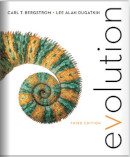
        My problem with Ball is that he overreacts in such an extreme degree that he tries to doubt the importance of the discovery of the structure of DNA by Watson and Crick in 1953 (see my previous blog). Tellingly, Ball relegates the 1962 Nobel Prize for DNA to a footnote. I can't say it better than Bergstrom and Dugatkin in their most recent Evolution textbook:

        Bergstrom,Dugatkin (2023)
        "For the better part of the past 4 billion years, desoxyribonucleic acid -DNA- has been the chemical underpinning of life on Earth. At a very basic level, it is changes in DNA sequences and DNA expression that underlie the process of biological evolution by driving changes in phenotype and causing differences in fitness." 

        After a description of the Watson-Crick structure of DNA they continue:

        "Pause for a moment and consider what is encapsulated into those last six sentences: It is a triumph of modern biology that we are capable of describing the stuff of life in such succinct terms." [2]

        Furthermore, we have good reasons to claim that DNA is the only molecule capable of sustaining life and giving rise to millions of species. There are no known rivals. There is no alternative. It would be a huge error to dismiss DNA to explain life on earth.

        Ball is not the first scientist to claim that DNA is not 'the secret of life'. Nearly 30 years ago Stuart Kauffman wrote:

        "Life does not depend on the magic of Watson-Crick base pairing or any other specific template-replicating machinery." [3]

        Nick Lane (2022) wrote: "genes did not 'invent' metabolism, but the reverse." [4], others have similar views [6].

        One can't discuss biology and evolutionary biology if one doesn't get DNA right. Philip Ball downgrades DNA to an extreme degree. But both emphasizing and de-emphasizing DNA too much is a bad thing. Emphasizing DNA too much only occurs with claims like "DNA is the blueprint of life" [5] and "DNA copies itself", "DNA self-replication", "Gene self-replication". Let's have a closer look. 

        Biologists know that these statements are only true in the cellular environment. Just as viruses can't self-replicate, 'our' DNA can't 'self-replicate'. DNA needs enzymes (polymerases) to replicate. Viruses need enzymes to replicate. This view creates a unity between viruses and 'our own' DNA. There is only a gradual difference in usefulness for the host (some claim that there are useful viruses).

        No biologist ever said DNA is alive. It is a big but dead polymer. It's an archive, a library. Biologists know that DNA on its own is not sufficient to explain life. The reason is that life consists of three interconnected subsystems: a hereditary system (DNA,RNA), an energy producing subsystem (metabolism) and a boundary system (membrane):

        The 3 parts of life according to Tibor Gánti [1]
        1. chemical motor system = metabolism
        2. chemical boundary system = cell membrane
        3. chemical information system = heredity, DNA


        It is immediately clear from this diagram that by definition only the total system can be called alive. DNA is a subsystem. So, it follows from the logic of this definition of life that DNA isn't alive. Furthermore, I didn't realize until now that our own DNA depends just as much as viruses on the cellular environment to do anything at all. I didn't see it in that way before. Viruses aren't alive. DNA isn't alive. Interestingly, it follows also that 'our'  DNA is a kind of 'parasite' of the cell. The cell, our cells are its hosts. So, not just DNA sequences such as transposons are parasitic. Paradoxically, the whole genome is a 'parasite'. A parasite requires a host. We are the host. Did I just rediscover Dawkins' selfish gene concept? By the way, the 'parasitic' nature of DNA is also the reason it can't be involved in the origin of life. In that sense DNA can't be the start of life.

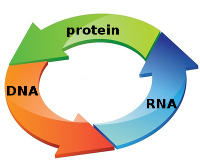
        vicious circle


        In the cellular environment DNA is not 'the start of everything', despite the fact that according to Crick's famous 'Central Dogma' information flows from DNA to protein. That may be confusing for some. DNA is not the start of everything in the cell. A circle has no starting point. Proteins are always required In the processes of DNA-replication, DNA transcription, mRNA splicing and translation. Those proteins must be present and have been synthesized earlier on. Indeed they have been synthesized on the basis of information in DNA. And in order to read that information enzymes have to be present...etc. That's the circle. 

        Strictly speaking genes do not 'control' development, because that suggests an active involvement of genes. Genes do not express themselves, they are being expressed. I agree with Ball's criticism that genes are not actively doing anything [6]. That's a gain.

        However, Ball's main point is that in order to understand 'how life works' one must understand the biochemical and physical forces involved in the cell and the organism. In the chapters Networks, Cells, Tissue, Bodies, Rethinking medicine, dozens of genes pop up again and again:

        Src, Int1, TNF, bicoid, caudal, even-skipped, Hunchback, Giant, Kruppel, Dkk2, Dkk4, FGF, Sonic hedgehog, HoxD13, FGFR3, EDAR, Hsp90, Notch, Otx, Hex, Wnt, Nodal, E-cadherin, SHH, Shroom, myosin II, NF1, NF2, chordin, BMP, TGF-β, Gata1, Gata2, GPU.1, Sinr, SinI, Oct4, Sox2, c-Myc, Klf4, FBn1, CFTR, TSLP, CTLA4, IL6R, HBB, SRY, Sox9, SF1, APP, BRCA1, BRCA2, p53, ZIC4, ...

        Conclusion:

        • If you can't tell a DNA-free, gene-free story, then don't pretend you can. 
        • If you do tell a DNA-free, gene-free story, then what is its relevance to biology?
        • If you need genes to tell your story, give them a proper place in your story.

        For example Ball writes in chapter 8: 

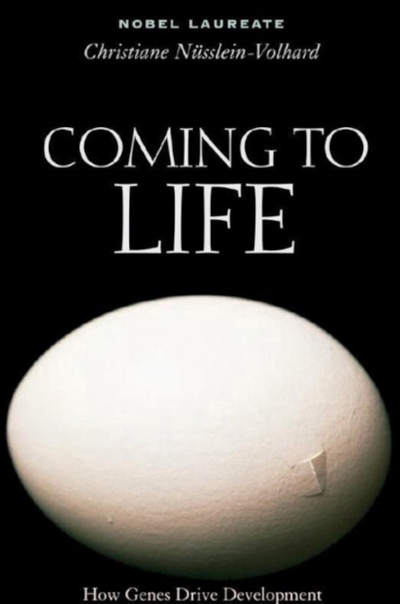
        "The discovery of 'patterning genes' for the early body plan transformed our understanding of how genes affect development, and won Nüsslein-Volhard and Wieschaus the 1995 Nobel Prize for physiology or medicine". 

        COMING TO LIFE
        Christiane Nüsslein-Volhard (2006)
        Coming to Life
        How Genes Drive Development

        Indeed! There you have it. According to the Nobel Prize website they "succeeded in identifying and classifying the 15 genes that direct the cells to form a new fly." [7]. So, 1) it's all about genes, 2) if genes are the words of the dictionary, then they discovered the meaning of those words. Those 'blueprint-geneticists' discovered which genes  are used in the early embryonic development, and when and where they are used. They discovered not only isolated words, but the context in which they are used. They are making significant progress in understanding important sentences of the 'language of life' (Francis Collins: 'the language of God'). It is part of 'how life works'. This research is opening the black box of development (see Fig. 2.1 in Ball's book).

        Anyway, there are no gradients without gene products. Alan Turing invoked hypothetical morphogens and gradients. Those 'blueprint-geneticists' proved that morphogens do exist. Just as those 'blueprint-geneticists' have proven that Mendels hypothetical factors do exist. That is science. That is progress.

        There is a lot more to say. But this is enough for today. I invited a physicist to comment on the physical aspects of How Life Works.


        Postscript: a contradiction

        2 March

        I discovered a few sentences in chapter 9 which seem to nullify everything Ball wrote in chapter 2 against the importance of DNA: 

        "we each have within us a deep evolutionary memory embodied in our genomes. If these are not blueprints, they nevertheless do encode information shaped and inherited over eons that is indispensable to our formation."  chapter 9. 17/123

        Well, in essence this is identical to my quote from Bergstrom-Dugatkin. ('eons' is in fact 3.5 billion years). Here, Ball describes the indispensability of DNA! Does it matter whether DNA is called a 'blueprint' or 'indispensable information'? What's the difference? He continues:

        "To what extent life is dictated by this Darwinian memory and to what extent it can draw on spontaneous ordering mechanisms is one of the central questions for understanding how it works."  
        Indeed, that seems to be the central question of the book How Life Works. It's all about the relative importance of DNA and spontaneous order. Both are indispensable. Then, why write a whole book to downplay DNA? Maybe, the consensus view in biology is that DNA is the most important cause of the creation of an organism?


        Notes

        1. Tibor Gánti (2003) The Principles of Life. See: my review. Ball points out that a living entity must have a boundary of some kind (Ch 9. 83/123)
        2. Bergstrom, Dugatkin (2023) Evolution, p 189. (textbook) see my website.
        3. Stuart Kauffman (1995) 'At Home in the Universe. The Search for Laws of Self-Organization and Complexity' (my review). Ball doesn't mention Kauffman's book.
        4. Nick Lane (2022) Transformer: The Deep Chemistry of Life and Death.
        5. No biologist uses 'Blueprint of life' literally. That's impossible: DNA is a linear sequence. A cell is 3-dimensional object. In a review of How Life Works Denis Noble wrote "It’s time to admit that genes are not the blueprint for life" (Nature). Fine, what are genes really?
        6. Ball quotes Richard Lewontin (1992): "Not only is DNA incapable of making copies of itself, but it is incapable of 'making' anything else." (end of Chapter 2) [1 March 2024]
        7. "15 genes that direct the cells to form a new fly". Is 'direct' a correct description of what happens in the organism? 


        Blogs about How Life Works


        Reviews by others